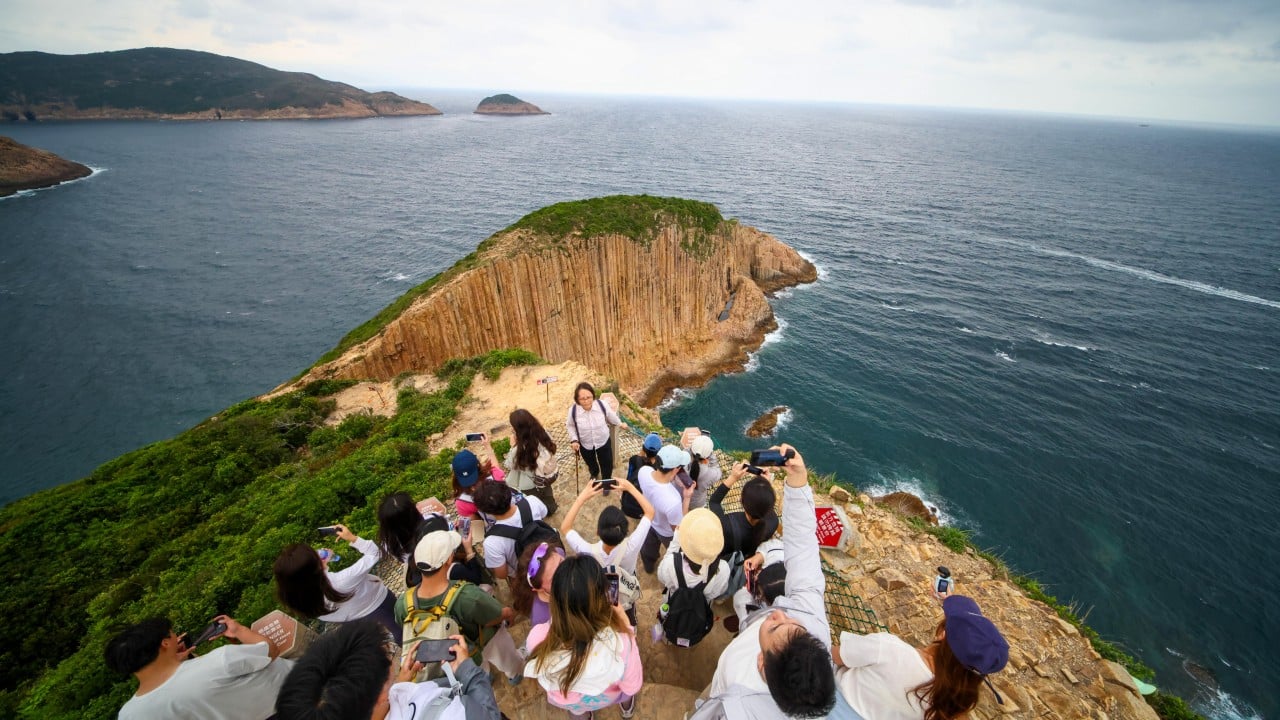
Every time mainland holiday crowds flood Hong Kong during Golden Week, the predictable chorus starts up. Conservation groups and hand-wringing commentators hyperventilate over trail erosion at Sai Kung, crowds at the High Island Reservoir East Dam, and rogue visitors disturbing marine life around Sharp Island. The lazy consensus prescribes the same failed remedy: more bureaucratic red tape, restricted permits, and hand-wringing about how fragile nature cannot possibly survive foot traffic.
This panic is entirely misplaced. The issue facing Hong Kong country parks is not an excess of human bodies. The crisis is a complete failure of pricing and asset management.
Let us look at the data without the emotional hysteria. Hong Kong designates roughly forty percent of its total land area as country parks and special areas. This is an astonishing density of protected green space sitting right against one of the most hyper-dense urban cores on earth. When environmental watchdogs catch tourists collecting sea cucumbers or digging out clams at remote marine sites, they diagnose the problem as "overtourism." They are wrong. The root cause is zero-cost access combined with zero infrastructure allocation.
When you price a finite, high-demand public good at absolute zero, you invite the exact tragedy of the commons you later complain about.
The Fallacy of Passive Conservation
For decades, the standard bureaucratic playbook relied on passive protection—crossing fingers, putting up weak warning signs, and dispatching underpaid Agriculture, Fisheries and Conservation Department officers to hand out brochures. Naturally, when ten thousand visitors descend on a narrow tombolo at Sharp Island over a four-day holiday, those warning signs fail.
Environmental groups like Greenpeace point to these infractions as proof that tourism and nature cannot coexist. This is false. What cannot coexist is medieval park management paired with modern mass mobility.
Consider a parallel from the business world. If a luxury resort or a private club experiences a massive surge in demand for a limited amenity, it does not lock the doors and cry about wear and tear. It introduces dynamic pricing, monetizes access, and invests the yield directly back into hardening the asset and hiring specialized enforcement. Yet when it comes to public eco-sites, bureaucrats expect pristine preservation while clinging to a socialist pricing model of free entry for everyone, everywhere, all at once.
The Real Cost of Free Access
Let us examine what happens when you introduce a reservation or quota system without any pricing mechanism—such as the recent trials for specific geopark zones. A digital permit system that costs nothing rewards the fast-fingered and the scalpers, while failing to capture a single dollar of economic rent from visitors who travel thousands of miles to experience the territory's unique geological formations.
More importantly, a blanket free-for-all concentrates damage because the government refuses to build durable infrastructure. Walk down to the High Island Reservoir East Dam during peak season. You will see thousands of people bottlenecked onto narrow dirt paths because authorities refuse to construct boardwalks, proper viewing platforms, and high-capacity waste management facilities out of a misplaced fear of "industrializing" nature.
By refusing to alter the physical footprint to handle volume, the state guarantees maximum ecological friction. A concrete boardwalk or a raised timber pathway does not destroy an ecosystem; hundreds of thousands of boots trampling raw topsoil because there is nowhere else to walk certainly does.
A Radical Alternative for Wild Spaces
If Hong Kong genuinely wants to protect its eco-sensitive sites without turning into a gated enclave reserved exclusively for local elites who know how to game permit apps, the strategy must pivot entirely.
First, implement a heavy environmental impact fee for non-residents visiting designated high-stress geopark zones and remote islands during peak Golden Week windows. If someone is willing to spend thousands on flights and hotels to visit the Sai Kung Volcanic Rock Region, they can afford a mandatory conservation surcharge.
Second, take those revenues and build hardened, brutalist-grade visitor infrastructure. Put in heavy-duty composite decking, permanent solar-powered waste compactors, and biometric-access turnstiles that track exact carrying capacities in real-time.
Third, stop treating every square foot of green space as an untouched wilderness. Hong Kong country parks are urban escape valves. They are managed landscapes. Designate high-throughput corridors designed to absorb ninety percent of the tourist volume safely, shielding the truly delicate micro-habitats behind actual physical barriers and heavy fines that are aggressively enforced by dedicated, well-funded rangers rather than part-time volunteers.
The environment does not need your pity, and it certainly does not need more hand-wringing op-eds lamenting the existence of tourists. It needs capital, engineering, and the courage to admit that nature management is an economic game whether the conservation lobby likes it or not. Stop locking the gates. Charge admission, build better paths, and let the crowds pay for the privilege of keeping the wild green.