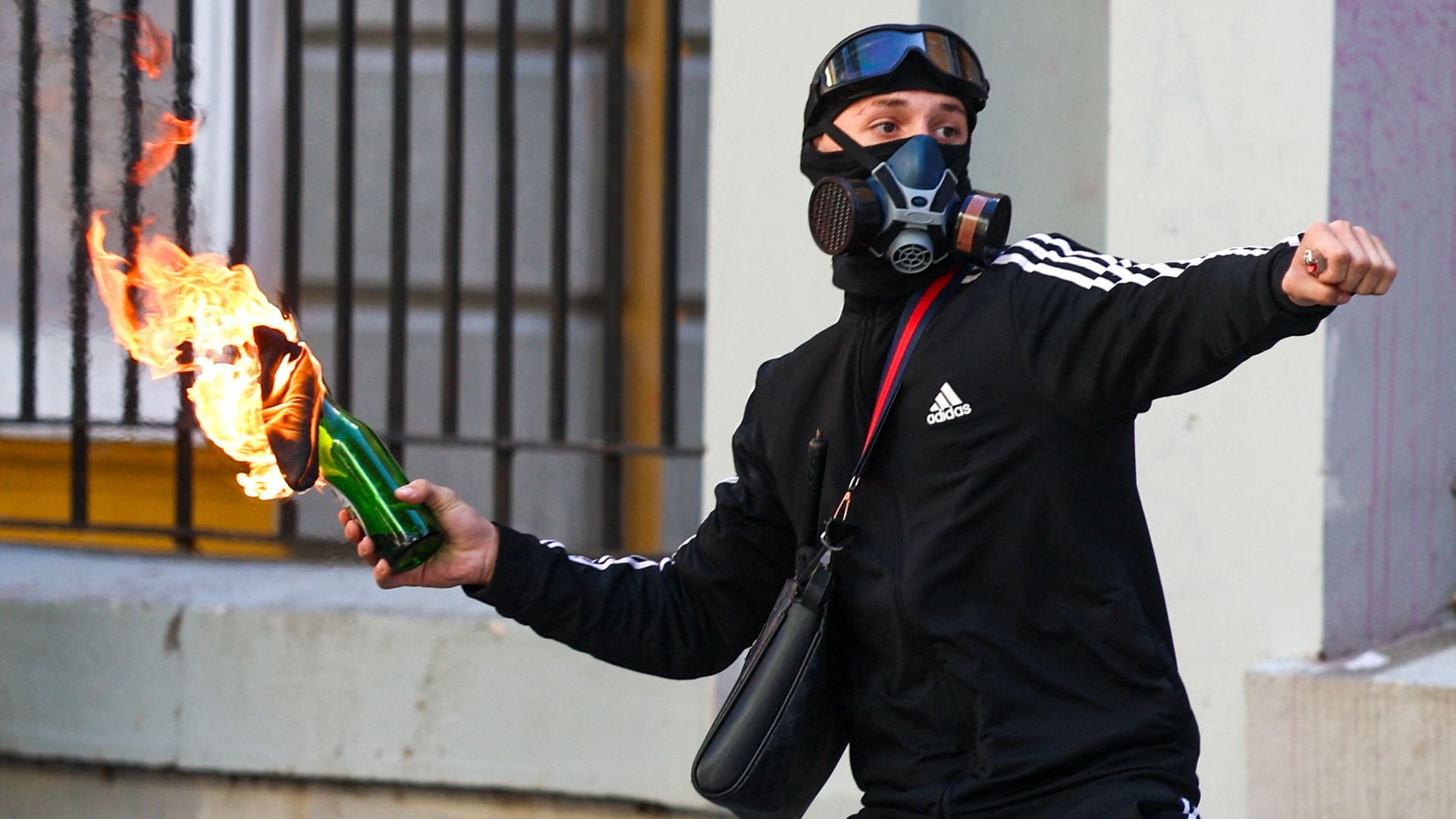
Tirana burns. Cameras roll. A Prime Minister steps up to a podium and delivers a line so predictable it could be stamped on an EU accession press kit: violent protests threaten European integration, not the ruling seat.
Buy that framing and you miss the entire game.
Street unrest is loud. It looks chaotic. It makes for dramatic television when tear gas drifts across Boulevard Deshmoret e Kombit or stones hit government ministries. So politicians and lazy wire copy treat every clash in Tirana like a match thrown near a stack of Copenhagen criteria.
Wrong. Completely backward.
Violent protests do not sink EU accession on their own. Chronic institutional decay, captured courts, politicized procurement, and selective justice sink EU accession. When a sitting government claims street anger is the real threat to Brussels while treating its own democratic guardrails as optional decoration, it is flipping cause and effect upside down.
I have watched political elites across the Western Balkans play this exact card for years. The script barely changes. Protests erupt over corruption allegations, cost-of-living pressures, election disputes, or perceived abuse of state power. The government calls the demonstrators hooligans endangering Albania's European future. Brussels sends a measured statement urging calm and dialogue. Nothing structural changes until the next flare-up.
Let's be precise about what EU accession actually requires. Under the revised enlargement methodology—often referred to as the "fundamentals first" approach—the European Commission does not grade countries on whether every Saturday afternoon in Tirana is peaceful. It grades them on rule of law, judicial independence, public administration reform, anti-corruption track records, fundamental rights, and economic criteria.
A street clash is a symptom. Often an ugly one. Sometimes destructive, occasionally reckless, and rightly subject to proportional law enforcement. Yet treating a protest as the cause of stalled European integration lets the people holding state power off the hook for the exact reforms Brussels demands of them.
The Lazy Consensus Around Protests and Accession
Conventional commentary loves a clean binary. Peaceful protest equals good democracy; violent protest equals anti-European chaos.
Real politics is far messier than that slogan.
In European democratic history, contentious street politics has frequently accompanied—and sometimes forced—institutional reckoning rather than ending it. When citizens feel courts are slow, selective, or shielded from accountability, or when media and public institutions feel tilted toward whoever holds the office, frustration spills onto the pavement. Condemning every flare-up as a direct assault on EU membership turns a complex governance crisis into a PR shield for the incumbent.
Even more importantly, EU membership is not a prize handed out for keeping streets quiet. Accession is a multi-year legal and institutional overhaul. Every chapter and cluster requires verifiable alignment with the acquis communautaire—the body of common rights and obligations that binds all EU member states.
Imagine a scenario where Tirana sees zero street protests for eighteen straight months, yet judicial appointments face quiet interference, high-level corruption prosecutions stall, and public tenders go to politically connected insiders. Does Brussels fast-track membership because the boulevards stayed tidy? Not a chance. Enlargement officials read audit reports, Venice Commission opinions, and rule-of-law benchmarks, not just street-level headlines.
Conversely, imagine a scenario where sharp, messy protests break out during a heated political moment, while independent prosecutors continue investigating graft, courts enforce rulings without fear or favor, and parliament passes genuine institutional reforms. Brussels still judges the institutional trajectory. Unrest creates noise and short-term diplomatic friction, sure. It does not erase a real reform record.
Why "Threat to Membership, Not Government" Is Political Sleight of Hand
Look closely at the phrasing behind that classic Prime Ministerial warning: a threat to EU membership, not to the government.
That line does heavy lifting for the person speaking it.
First, it wraps the incumbent in the flag of European integration. If you challenge the government—especially in the streets—you are cast not merely as an opposition rival, but as an obstacle to Europe itself. That is a classic rhetorical trap. In a country where public support for EU membership has historically run high, framing dissent as a threat to Brussels is an attempt to borrow legitimacy from European aspirations while deflecting scrutiny from domestic performance.
Second, it projects invulnerability. Saying protests do not threaten the government signals strength to supporters and warnings to rivals. Yet governments rarely fall from a single protest alone; they erode when prolonged unrest exposes deeper cracks—elite fractures, loss of public trust, economic drag, or mounting pressure from external partners tired of recurring instability.
Third, it shifts responsibility outward. When a government insists the danger to EU progress comes from angry crowds rather than unfinished domestic reforms, it avoids answering uncomfortable questions:
- Are anti-corruption bodies operating with true independence across all political tiers?
- Are public institutions insulated from partisan capture?
- Are electoral rules, media freedom, and civic space treated as core European standards rather than tactical inconveniences?
I have seen institutions across transition democracies spend millions on glossy strategic communications and European integration branding while leaving core governance bottlenecks untouched. Glossy narratives cannot substitute for enforceable law. Brussels knows the difference between reform theater and real institutional change.
What People Actually Get Wrong About Enlargement
When headlines link violent protests to EU membership, readers usually ask the wrong questions. Let's tear down the most common ones.
"Do violent protests stop a country from joining the EU?"
Not by themselves. Protests—even violent ones—are political shocks, not legal disqualifiers. What stops or slows enlargement is a persistent failure to meet rule-of-law, democratic governance, and economic benchmarks, combined with political reluctance inside existing EU member states. If violent unrest becomes chronic or spirals into a constitutional breakdown, it can hurt investor confidence and diplomatic standing. Still, the decisive filter in Brussels remains institutional performance over time.
"Should governments crack down hard to protect their EU path?"
Heavy-handedness is one of the fastest ways to invite criticism from European institutions. EU standards do not just care about order; they care about how order is kept. Disproportionate force, arbitrary detentions, or restrictions on peaceful assembly and press coverage generate sharp pushback from European monitors and member states. Real stability comes from credible institutions and public trust, not just riot shields.
"Is the opposition right whenever protests turn violent?"
No. Giving a free pass to violence is just as lazy as blaming every protest for stalled EU talks. Throwing rocks, damaging property, or attacking police harms bystanders, feeds cycles of escalation, and hands incumbent spin doctors easy footage to change the subject from corruption or misrule to public disorder. Sharp opposition knows that street pressure only builds lasting leverage when paired with credible policy alternatives and institutional discipline.
The Real Bottleneck Nobody Wants to Own
Let's step back from partisan shouting matches and look at how enlargement actually works in practice.
European integration is a two-sided bargain. On the candidate side, governments must build durable democratic institutions, clean up public administration, align laws, and prove that reforms survive political convenience. On the EU side, member states weigh geopolitical strategy against absorption capacity and internal politics.
When a Balkan leader tells the public that rowdy protests endanger EU membership, they are usually exaggerating one variable while ignoring bigger ones they control.
If a government genuinely wants to protect its European trajectory during turbulent times, its job is not to lecture protesters from a pedestal while treating accountability as optional. Its job is to make sure the state itself is unimpeachable.
That means:
- Let justice run without political fingerprints. Protect prosecutorial and judicial independence even when investigations get uncomfortably close to allies.
- Keep policing disciplined and proportionate. Separate violent offenders from lawful protesters cleanly, transparently, and within the law.
- Fix the underlying grievances instead of mocking them. People rarely risk tear gas over nothing; address cost-of-living pressures, opaque contracting, and institutional distrust directly.
- Stop weaponizing "Europe" as a shield against criticism. European integration is a set of democratic standards, not a get-out-of-jail-free card for rulers.
Where This Contrarian Take Can Go Wrong
Honesty requires admitting the blind spots of pushing back against the "protests ruin EU talks" narrative.
Downplaying street violence carries real risks. Unchecked riots can injure officers and civilians, wreck small businesses, paralyze cities, and alienate moderate citizens who want change without chaos. If unrest looks like lawlessness rather than legitimate grievance, hardliners inside EU capitals can use the optics to argue for caution or delay.
A serious contrarian position does not cheer for disorder. It insists on clear eyes: condemn violence and protect public safety, while refusing to let any government use street clashes as a smoke screen for its own governance failures.
Keep the streets lawful. Hold the institutions to European standards. Stop mistaking the symptom for the disease.