Ink dries quickly on expensive parchment. It takes mere seconds for a hand to move across a contract, leaving behind a trail of dark fluid that alters the weight of nations. But miles away from the mahogany tables and the quiet hum of filtered air conditioning, that same ink smells like sulfur, wet earth, and panic.
Consider the kitchen of a modest apartment in Kyiv. The hour is late. The digital clock on the microwave blinks red through the gloom, a constant reminder of the rolling blackouts that have turned urban evenings into exercises in shadow navigation. Maria stares at her tea. The water in the kettle took three times longer to boil tonight because the pressure on the municipal line dropped again. Every drop of diesel fuel brought across a border, every barrel redirected or locked behind a signature, dictates whether that kettle boils tomorrow, or whether the radiators hum with life, or whether the frost forms intricate, delicate ferns on the inside of the double-paned glass.
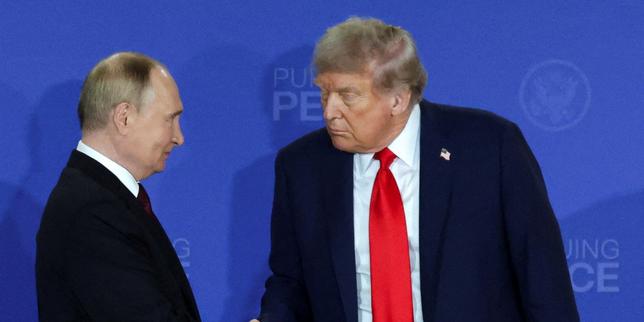
When headlines flickered across the globe carrying the news of a new accord brokered between Donald Trump and Vladimir Putin regarding the flow of diesel, the world outside looked for immediate explosions. They looked for red arrows on maps. They listened for the sharp crack of artillery.
Instead, the change arrived as a whisper.
Agreements forged at the highest echelons of power rarely feel real to the people who bear their consequences. To read the dry transcripts of geopolitical maneuvering is to witness chess pieces moving across a board where the pieces are made of flesh and bone, though the players only see wood. The accord struck regarding fuel shipments—the lifeblood of heavy armor, agricultural combines, and emergency generators alike—sent an immediate, freezing tremor through the corridors of power in European capitals and struck a direct blow to the fragile architecture of Ukrainian resilience.
For months, the calculus of survival had rested on a grim, desperate arithmetic. Every liter of diesel was measured against the distance a tank could travel or the hours a hospital generator could keep a ventilator breathing while surgical lights flickered. To watch major external actors carve out parallel tracks of negotiation over these vital resources is to witness the ground shifting beneath one's feet while the sky remains deceptively clear.
In Warsaw and Berlin, the reaction was not merely diplomatic alarm; it was a profound, chilling realization of isolation. Allies who had spent years locking arms in public solidarity suddenly found themselves peering through the cracks of a fractured consensus. The whisper of a deal bypassing traditional channels reminded everyone involved that grand coalitions are fragile things, held together by shared fears that can be quietly unstitched in a quiet room behind closed doors.
To understand why a signature on a diesel agreement matters more than a thousand fiery speeches, you have to look at the machinery of modern endurance. A modern state at war does not run on patriotism alone. It runs on lubrication, on combustion, on the heavy, sluggish flow of refined hydrocarbons through frozen pipes. When supply lines are redrawn by distant architects, the immediate effect is felt in the logistics depots where quartermasters stare at dwindling reserves with a quiet, sickening dread.
The strategy behind the accord was framed in the cold language of pragmatism, of finding off-ramps, of stabilizing erratic markets that threaten global economic equilibrium. But pragmatism in a war zone is a luxury bought with someone else's security. When external powers negotiate the terms of energy flow, they are effectively drawing invisible lines around who gets to stay warm and who must learn to endure the dark.
Maria does not know the legal nomenclature of the document signed thousands of miles away. She does not parse the clauses or debate the diplomatic subtext. She only knows that when the wind hits the windowpane with a sharper bite, her breath fogs in the air of her living room. She pulls her woolen blanket tighter around her shoulders, listening to the distant, rhythmic thrum of a neighborhood generator struggling to keep pace with the demand.
That is where geopolitics actually lives. Not in the grand press conferences, not in the triumphant handshakes captured by telephoto lenses, but in the contraction of a chest against the cold, in the sudden tightening of a jaw when the lights flicker and refuse to come back on.
History is rarely made by grand catastrophes alone. More often, it slips in through the administrative details, the quiet concessions, and the stroke of a pen that rearranges the world while the rest of us are simply trying to stay warm.