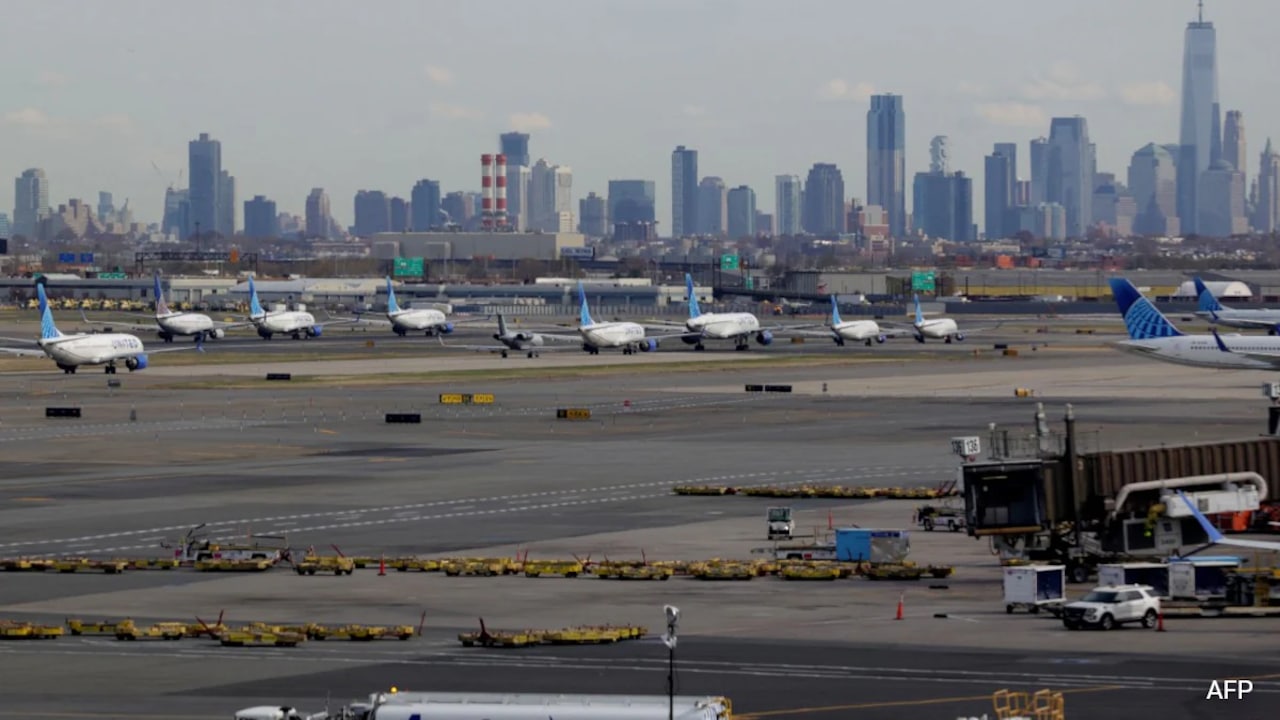
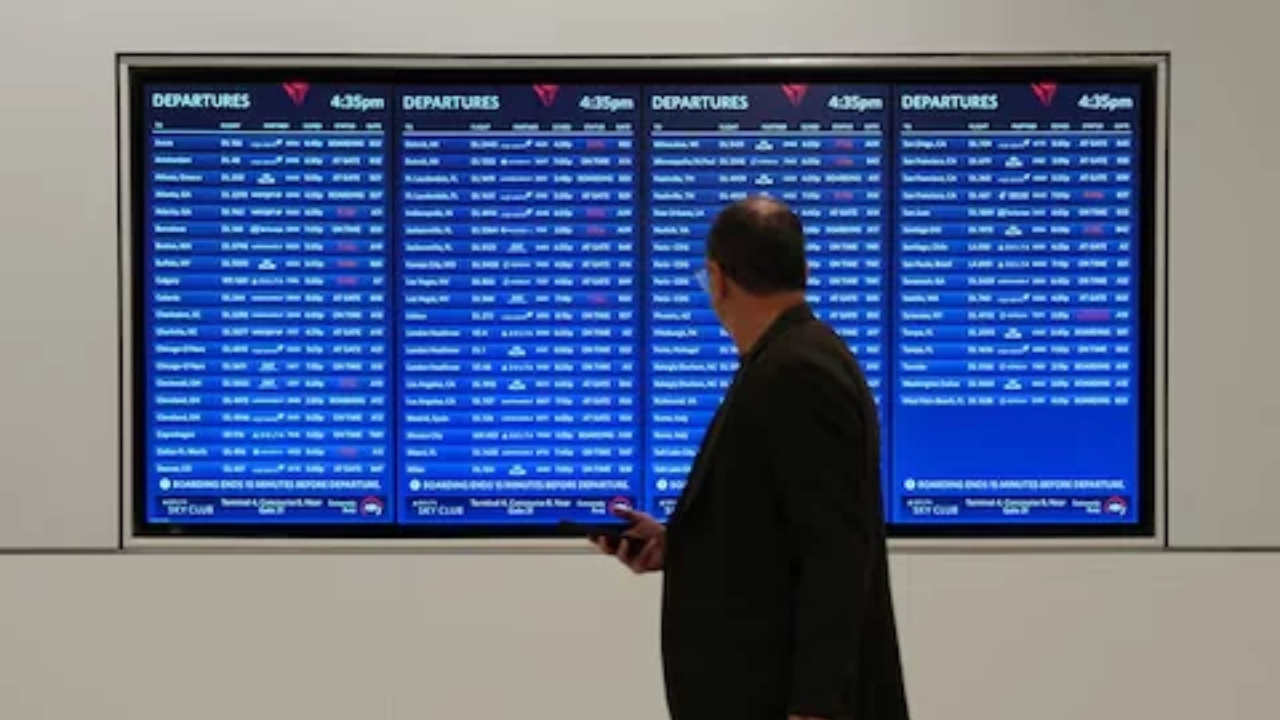
Officials love a Sunday deadline. It sounds neat. It sounds comforting. When a nationwide ground stop paralyzes the U.S. airspace, federal regulators and airline executives immediately trot out to the podiums with a soothing promise that the system will "recover by the end of Sunday."
Do not buy it. Not for a second.
That comforting timeline is a masterclass in public relations spin, engineered to keep panicked flyers from canceling their trips en masse and tanking quarterly revenue. When a major aviation meltdown happens—whether it is the catastrophic NOTAM database failure of January 2023 or a cascading FAA air traffic control outage—lifting the ground stop is merely the starting gun for a secondary, invisible disaster.
The lazy consensus in mainstream aviation reporting treats a ground stop like a traffic jam on the interstate. Clear the wreck, hit the gas, and everyone gets home for dinner. That is not how commercial aviation works. An airline network is not a highway; it is a tightly wound, hyper-fragile clockwork mechanism running at 98% capacity with zero slack in the gears. When you jam a wrench into that clock for even ninety minutes, you do not fix it by pulling the wrench out. You have to rebuild the gears while the clock is still ticking.
If you are holding a boarding pass for Monday, Tuesday, or Wednesday after a nationwide ground stop, you are sitting on a ticking time bomb. Here is what the airlines and the FAA are not telling you about what "recovery" actually means.
The Myth of the Instant Reset
To understand why the "Sunday recovery" narrative is pure fiction, you have to understand the brutal math of modern airline scheduling.
Years ago, legacy carriers built padding into their schedules. Planes sat at gates for two hours between flights. Reserve crews waited on standby in major hubs. Spare aircraft sat parked on the tarmac, ready to swap in when mechanical issues or weather delays struck.
Wall Street killed that buffer. Under the relentless pressure to maximize Return on Invested Capital (ROIC) and drive down Cost per Available Seat Mile (CASM), airlines optimized every ounce of slack out of their operations. Today, a narrowbody jet like a Boeing 737 or an Airbus A321 is scheduled to fly up to six legs a day, with turnaround times at the gate squeezed down to 35 or 40 minutes.
I have sat in network operations centers during major disruptions and watched billion-dollar algorithms completely flatline. When a nationwide ground stop freezes departures for three hours, thousands of aircraft end up in the wrong cities. A plane meant to fly from Chicago to Denver, then Denver to Phoenix, and finally Phoenix to Seattle never leaves O'Hare.
Even when the FAA lifts the ground stop, that plane cannot simply teleport to Denver. The passengers in Denver are stranded. The passengers in Phoenix are stranded. Because airlines routinely operate at load factors exceeding 85% to 90%, there are no empty seats on later flights to absorb the displaced travelers. You cannot put 180 stranded passengers onto a flight that already has 175 tickets sold. Clearing a backlog of that magnitude does not take 24 hours. It takes four to five days of grueling, manual reaccommodation.
The Crew Legality Domino Effect
Aircraft positioning is only half the nightmare. The real silent killer of airline recovery is federal crew rest mandates.
Under Federal Aviation Administration regulations—specifically FAR Part 117—pilots and flight attendants operate under strict, non-negotiable duty time limits. These rules exist for an obvious reason: exhausted pilots crash airplanes.
When a ground stop traps a flight crew on the tarmac or in a terminal for four hours, their duty clock does not pause. It keeps ticking. By the time the ground stop is lifted and the plane is cleared for takeoff, that crew has frequently "timed out." They are legally prohibited from flying the aircraft.
Now, consider what happens next. That timed-out crew must be sent to a hotel for a mandatory minimum rest period—typically 10 hours behind the door, which translates to 12 or 14 hours away from the airport. Meanwhile, the aircraft sits at the gate, fully fueled, mechanically sound, and completely useless because there is nobody legally allowed to fly it.
Worse still, the replacement crew meant to fly that jet on its next leg is now sitting in another city, waiting for a plane that never arrived. Their clock is ticking, too.
Imagine a scenario where a single hub like Atlanta or Dallas-Fort Worth loses 40% of its scheduled departures for three hours. By midnight, hundreds of pilots and flight attendants are scattered across the wrong time zones, sleeping in airport hotels, completely disconnected from their assigned aircraft. Airline crew-scheduling software—much of which still relies on legacy mainframe architecture from the 1990s—chokes on this level of chaos. Schedulers have to manually call crews on the phone, one by one, to piece together legal pairings.
When an airline spokesperson tells a reporter on Friday afternoon that operations will be "back to normal by Sunday night," they are ignoring the mathematical reality of FAR Part 117. The crews are out of position, their duty clocks are scrambled, and the dominoes will keep falling well into the middle of the following week.
Why Officials Peddle the Sunday Illusion
If industry insiders know the Sunday recovery timeline is bogus, why do transportation officials and airline executives keep repeating it?
Follow the money and the liability.
First, there is the Department of Transportation (DOT) refund mandate. Under federal rules, if an airline cancels your flight or significantly delays it, and you choose not to travel, the airline owes you a full cash refund—not a travel voucher. However, if you panic on Friday and cancel your Monday flight before the airline officially cancels it, you forfeit your right to a cash refund on a non-refundable ticket. By projecting calm and promising a full recovery by Sunday, airlines trick Monday and Tuesday travelers into holding onto their tickets until the inevitable rolling cancellations hit at the last minute.
Second, look at schedule completion metrics. Airlines are obsessed with reporting clean operational numbers to Wall Street and the DOT. A flight delayed by four hours still counts as a "completed" flight. A flight canceled outright hurts their completion factor. Consequently, carriers will hold onto a doomed flight schedule for as long as humanly possible, rolling delays forward in 30-minute increments rather than ripping off the band-aid and canceling flights proactively.
This creates the illusion of a recovering system. On Sunday evening, the departure boards at major airports look green. The headlines declare victory. What the headlines miss is that airlines achieved that green board by quietly canceling 15% of Monday's schedule in advance, or by operating ghost flights with no passengers just to get jets back to their maintenance bases.
The Hard Truth About The FAA's Tech Debt
We also need to stop pretending that these nationwide ground stops are freak accidents. They are the predictable result of decades of bipartisan neglect regarding the National Airspace System.
The FAA is tasked with managing the most complex, highest-volume airspace on earth using infrastructure held together by digital duct tape. While airlines have spent billions on sleek mobile apps and biometric boarding gates, the underlying government architecture—from the Notice to Air Missions (NOTAM) system to the En Route Automation Modernization (ERAM) platforms—suffers from chronic underfunding and glacial procurement cycles.
Every time a single server glitches, a radar facility loses power, or a telecom line gets severed by a backhoe in Virginia, the entire continent feels the shockwave. Why? Because the system lacks true redundancy.
Of course, there is a massive caveat to criticizing the FAA's caution. When the system glitches, triggering a nationwide ground stop is the right call. Safety in commercial aviation is built on a zero-tolerance approach to systemic blindness. If air traffic controllers cannot verify flight plans or hazard notices, keeping every plane on the ground prevents mid-air collisions. Nobody wants controllers winging it with 45,000 lives in the sky.
The problem is not the ground stop itself. The problem is the gaslighting that follows. Pretending that a brittle, over-leveraged aviation network can bounce back from a total freeze in 48 hours insults the intelligence of every traveler sleeping on a terminal floor.
Dismantling the Traveler's Playbook
When a ground stop hits, standard travel advice tells you to "be patient," "wait in line at the customer service desk," or "call the airline's 1-800 number." Following that advice is how you end up stranded in Charlotte for four days.
If you want to survive an aviation meltdown, you have to stop acting like a passive customer and start operating like a logistics dispatcher.
- Never get in the physical customer service line. By the time you reach the front of a 200-person queue at the gate, every viable seat for the next 72 hours is gone. While standing in line, open the airline's app, call the international customer service line (such as the UK, Canadian, or Australian support numbers, which route to the exact same reservation systems with a fraction of the hold time), and message the airline on social media simultaneously. Take whichever channel connects first.
- Feed the agent exact flight numbers. Reservation agents are overwhelmed during meltdowns and rely on automated rebooking tools that only look at direct routes or standard hubs. Do not ask them, "What do you have to Boston?" Open Google Flights, find an obscure two-stop routing with open seats on the same airline or a codeshare partner, and tell the agent: "Please put me on Flight 1402 to Detroit, connecting to Flight 889 to Boston." Doing their job for them gets you out of the airport while everyone else is still arguing.
- Know Rule 240 and interline agreements. Legacy carriers (Delta, United, American) maintain interline agreements with each other. During a major disruption—provided the delay is within the airline's control, such as an IT outage—you can demand to be endorsed over to a competing airline at no cost. Budget carriers like Spirit, Frontier, and Southwest do not have these agreements. If you fly ultra-low-cost during a meltdown, you are entirely at the mercy of their sparse route network.
- Book a refundable backup ticket immediately. The moment a nationwide ground stop is announced, pull out your phone and buy a fully refundable, one-way ticket on a completely different airline for the following day. Yes, it ties up cash on your credit card. Yes, it feels aggressive. If your original airline actually recovers on time, you cancel the backup ticket for a 100% refund. If they collapse into rolling cancellations—which they usually do—you just bypassed 50,000 stranded passengers and guaranteed yourself a seat home.
Stop Waiting for Sunday
The next time a major aviation outage grinds U.S. air travel to a halt, watch the press conferences closely. Listen to the carefully chosen words of the Transportation Secretary and the airline CEOs. Notice how they always promise that the system is "stabilizing" and that normal operations will resume by the end of the weekend.
Recognize it for what it is: corporate triage designed to manage headlines, not move passengers.
The planes might start taking off again on Friday afternoon. The radar screens might glow green on Saturday. By Sunday night, the press releases will declare that the crisis is over.
Tell that to the thousands of travelers still hunting for their lost luggage on Wednesday morning, or the business flyers sitting on a tarmac in Newark waiting for a pilot who just timed out in Miami. In modern American aviation, the ground stop is just the appetizer—the real pain starts after the "all clear" is given.