The Mechanics of Atmospheric Thermal Compression
The escalation of sea surface temperatures in the central and eastern tropical Pacific Ocean dictates a predictable cascading effect on the climate architecture of Southeast Asia. As the El Nino Southern Oscillation (ENSO) transitions into a high-intensity phase, the traditional Walker Circulation weakens. The eastward shift in atmospheric convection suppresses the typical convective rainfall patterns over the Malaysian archipelago, resulting in a severe reduction in precipitation and an inflation of baseline ambient air temperatures.
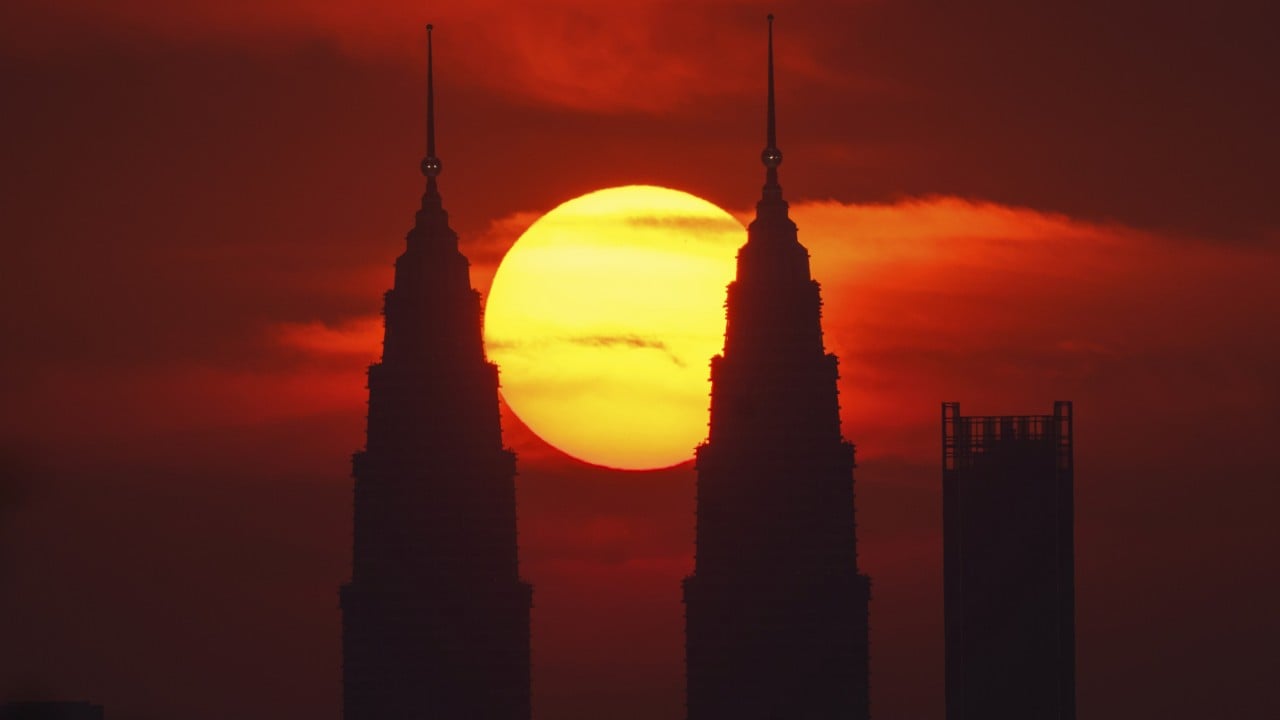
Data from the Malaysian Meteorological Department indicates that this strengthening atmospheric configuration will likely drive regional temperatures past historic thresholds between late 2026 and mid-2027. Projections place potential localized peaks between 39°C and 40°C, threatening the long-standing national record of 40.1°C established in Chuping, Perlis, during the extreme 1997–1998 ENSO cycle. While the surrounding maritime air masses afford a slight buffering capacity against the extreme absolute temperatures observed in continental landmasses, the intersection of high relative humidity with elevated thermal baselines poses severe risks to economic productivity, agricultural yields, and structural infrastructure stability.
The Three Pillars of Macro-Environmental Vulnerability
Assessing the upcoming climatic stress requires separating its impacts into discrete operational vectors. A failure to address these pillars individually leads to systemic errors in public resource allocation.
Agricultural Yield Degradation and Soil Balance
The primary threat to the domestic primary sector centers on the moisture retention deficit within agricultural soils, particularly in major palm oil and rice-producing zones across Sabah, Sarawak, and northern Peninsular Malaysia.
- Water Stress Index Acceleration: A projected reduction in baseline rainfall by up to 40% limits the deep-soil moisture recharge required for perennial crop stabilization.
- Pollination Failure Thresholds: Prolonged exposure to temperatures exceeding 37.5°C during critical growth phases induces physiological stress in oil palm trees, creating a production lag that can depress yields for up to 24 months post-event.
- Irrigation Infrastructure Depletion: Reservoir storage drawdowns compromise the double-cropping cycles of paddy fields, forcing reliance on emergency ground-pumping systems that increase operational expenditure.
Hydrological Stress and the Energy Sector Friction Points
The conversion of high ambient heat into municipal resource stress follows a direct kinetic path. As surface water evaporation rates accelerate, the storage levels in key hydro-generation and consumption reservoirs fall.
- Thermal Efficiency Penalties: Gas-fired and thermal power plants encounter lower operational efficiency as cooling water intake temperatures rise, requiring higher auxiliary energy loads just to maintain baseline output.
- Peak Demand Disparity: The mathematical correlation between every 1°C increase in ambient temperature above 30°C and municipal cooling demands creates an exponential strain on the national grid infrastructure.
- Industrial Processing Bottlenecks: Water scarcity forces regional authorities to ration water distribution, directly choking high-volume industrial manufacturers and semiconductor fabrication facilities that require continuous ultrapure water supplies.
The Human Thermal Capacity Threshold
Human physiological limits represent the final boundary of environmental vulnerability. In tropical environments, the wet-bulb temperature—a metric combining heat and relative humidity—serves as the primary indicator of survivability and labor productivity. When ambient temperatures hover near 40°C with humidity levels exceeding 70%, the human body struggles to dissipate heat via sweat evaporation.
The resulting systemic stress presents as an underreported spike in heat exhaustion and localized metabolic failures, particularly within outdoor construction and agricultural sectors. The economic cost emerges as a sharp contraction in labor hours and an inflation of workplace healthcare liabilities.
Quantifying Fire Risk through Predictive Modeling
The propagation of wildfires during prolonged dry spells is a direct function of fuel moisture content and atmospheric vapor pressure deficits. The Fire and Rescue Department has isolated over 180 persistent geographic hot spots prone to recurring open burning, primarily concentrated across industrial and agricultural corridors in Selangor, Johor, and Kedah.
[Atmospheric Moisture Deficit]
         │
         ▼
[Decline in Fuel Moisture Content] ──► [Accelerated Ignition Probability]
         │
         ▼
[Surface Peat Layer Desiccation] ──► [Subterranean Haze Propagation]
Peatlands represent a distinct risk factor. When the water table drops below critical thresholds, dried peat becomes highly combustible. Unlike surface fires, peat fires burn subterraneanly at low temperatures, producing dense particulate matter ($PM_{2.5}$) that resists standard airborne suppression tactics. The resulting haze creates a regional air pollution barrier, lowering solar radiation levels, interrupting logistics, and introducing massive drag into the national transportation network.
Strategic Resource Interventions and Tactical Limitations
Mitigating a high-intensity climate anomaly requires a proactive distribution of hardware and systemic capital rather than reactive disaster management. The National Disaster Management Agency has deployed targeted cloud seeding operations to stabilize reservoir levels prior to the peak dry phase. The mechanical reality of cloud seeding, however, demands specific atmospheric parameters; without adequate cumulative ambient humidity and convective cloud formations, silver iodide or sodium chloride deployments yield negligible precipitation changes.
The Operational Playbook for Industrial and Grid Resilience
To protect supply chains and civil stability against severe thermal stress, industrial operators and state planners must deploy specific engineering controls:
- Decentralized Cooling Redundancy: Major manufacturing units must transition from open-circuit cooling towers to closed-loop chiller configurations equipped with variable-speed drives to mitigate evaporative water loss.
- Dynamic Load Shifting: Grid operators must implement automated demand-response contracts with heavy industrial consumers, shifting energy-intensive processes to off-peak night hours to insulate the distribution grid from midday thermal overload.
- Sub-Surface Water Auditing: Facilities must establish immediate closed-loop recycling loops for process water, aiming for a minimum 35% reclamation rate to hedge against municipal supply shortfalls.
Rather than waiting for localized infrastructure failures, municipal authorities must enforce immediate, mandatory modifications to outdoor labor shifts, formalizing a split-day schedule that halts high-exertion activity between 11:00 and 16:00. Securing industrial continuity during this period requires treating climate volatility as a structural operating constraint rather than a passing seasonal variant.