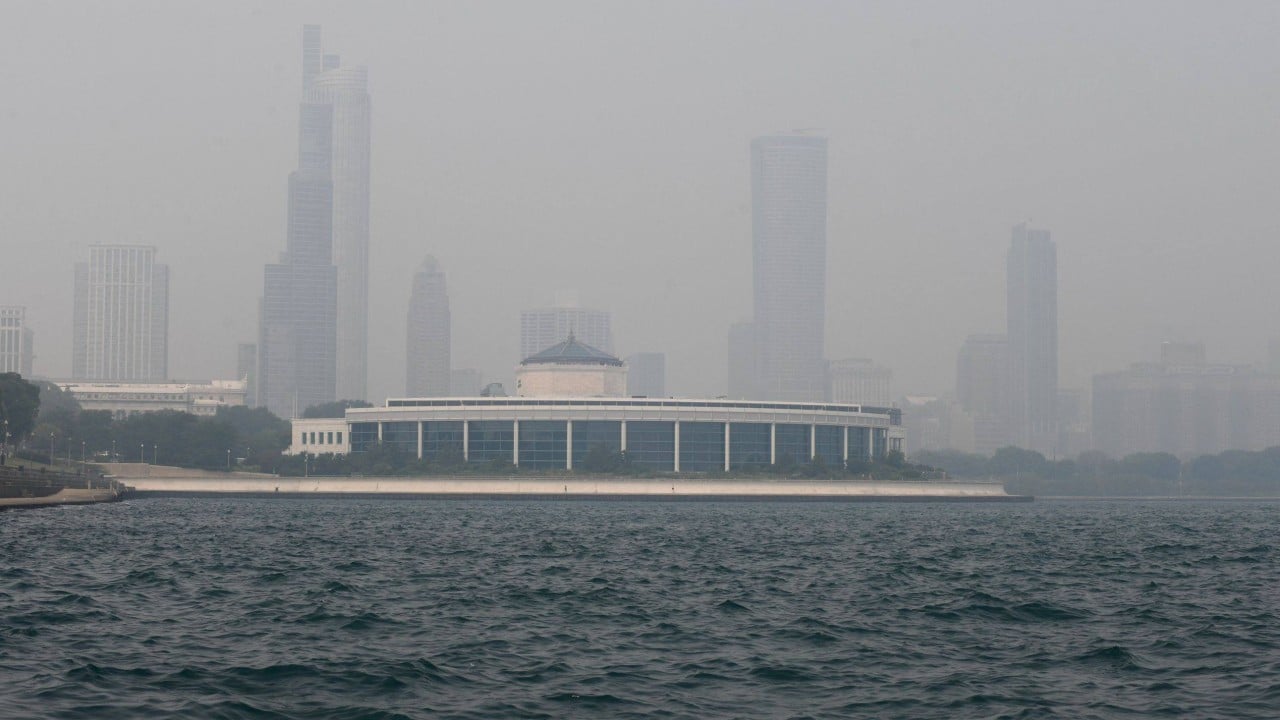
When the orange shroud settled over the industrial corridors of Detroit and the high-rises of Manhattan, it did more than trigger air quality alerts for a hundred million citizens. It transformed atmospheric drifting into a volatile weapon of international trade policy. The assertion by the American executive that a neighbor must pay financial damages for airborne soot represents an unprecedented escalation in transboundary friction, weaponizing environmental disasters into transactional leverage. This is no longer just a crisis of ecology or public health. It is the beginning of a protectionist doctrine where weather patterns dictate trade penalties.
At the core of the current diplomatic row is a fundamental clash of political philosophies, economic pressures, and legal realities. When U.S. President Donald Trump used a high-profile soccer match to warn Canadian Prime Minister Mark Carney that Ottawa must pay damages or face severe trade penalties, he was not merely venting on social media. The threat to tie wildfire mitigation to import duties targets the very foundation of North American trade integration, right as the continent faces a highly unstable period of economic renegotiation.
Behind the heated rhetoric lies a complex web of legal limitations, shifting environmental dynamics, and a profound misinterpretation of how modern forestry operates. The argument coming from Washington hinges on a premise of willful negligence, asserting that Canadian authorities are purposefully allowing remote timberlands to burn. Yet an examination of the structural realities reveals a much messier truth that both capitals are reluctant to fully address.
The Economics of a Soot Stained Border
The direct impact on American manufacturing provided the immediate spark for this diplomatic flare-up. In Michigan, the automotive heartland ground to a sudden halt as particulate matter readings soared past hazardous thresholds. Assembly plants faced mandatory closures to protect workers, interrupting tight supply chains that rely on hourly component deliveries across the Ambassador Bridge. For an administration obsessed with industrial output, the sight of empty factory floors due to smoke blowing across Lake Superior was an intolerable economic insult.
Estimates from economic analysts suggest the mid-July factory shutdowns cost the American manufacturing sector hundreds of millions of dollars per day. The administration seized on these numbers to justify a radical proposition. If a country cannot contain its domestic environmental hazards, it must foot the bill for the external economic fallout. This logic expands the definition of state responsibility to include the unpredictable behavior of the natural world.
The Canadian response has focused heavily on the integrated nature of continental defense against natural disasters. For generations, wildfire management between the two nations operated under an unwritten pact of mutual aid. When California faced catastrophic blazes, Canadian water bombers and ground crews flew south without a bill being rendered. Now, that historical goodwill is being weighed against a rigid ledger of costs and benefits. Ottawa points to its multi-billion-dollar investments in community resilience, but Washington views those figures as insufficient when American cities are choked in ash.
The Myth of the Controlled Wilderness
The primary accusation leveled against the Canadian government is a failure of basic forest management and debris removal. The critique suggests that if crews simply cleared the underbrushed floors of the northern timberlands, the catastrophic blazes in northwestern Ontario would cease to exist. This perspective relies on a fundamental misunderstanding of the scale and geography of the global boreal ecosystem.
The current fires are concentrated across hundreds of thousands of square kilometers of isolated terrain, much of it inaccessible by road. The idea that teams of workers can manually clear thousands of miles of wilderness debris is logistically impossible. In these remote regions, the dominant management strategy has long been one of calculated containment. Fire is a natural component of boreal renewal, and authorities prioritize resources around human infrastructure, towns, and critical infrastructure links.
Allowing remote fires to burn is an intentional ecological strategy, not a bureaucratic oversight. When a lightning strike ignites a stand of black spruce hundreds of miles from the nearest settlement, suppression efforts are often restricted to observation. Attempting to extinguish every fire across millions of acres of trackless wilderness would exhaust national budgets within weeks. However, when these managed blazes combine under extreme wind conditions, they generate massive smoke columns that travel thousands of miles, turning a local ecological cycle into an international political crisis.
Legal Walls and Tariff Workarounds
The threat to levy punitive duties to compensate for smoke pollution faces intense domestic and international legal hurdles. Earlier judicial decisions significantly restricted the executive branch from using sweeping emergency powers to impose unilateral tariffs on trading partners. This legal constraint leaves American trade officials scrambling to find alternative mechanisms to enforce the president’s demands.
To bypass these judicial limits, the administration is exploring a patchwork of traditional trade remedies, attempting to reframe environmental management as an indirect state subsidy. The argument posits that by failing to invest heavily in total fire suppression, Canada artificially lowers the operating costs of its forestry and timber sectors, creating an unfair trade advantage. It is a highly unorthodox legal theory that will almost certainly face intense challenges before international trade panels.
The Trade Mechanism Dilemma
| Proposed Policy | Intended Mechanism | Legal Obstacle |
|---|---|---|
| Environmental Surcharge | Direct levy on all Canadian imports entering through northern border checkpoints. | Violates standing regional trade agreements and lacks explicit statutory authorization. |
| Forestry Countervailing Duties | Targeted tariffs on lumber products to offset perceived state neglect of public lands. | Requires proof of direct economic benefit to specific Canadian exporters. |
| Sanction Bills | Legislative mandates targeting specific foreign officials for failing to mitigate transboundary harm. | Faces deep skepticism in Congress over diplomatic fallout with a major strategic ally. |
The legislative branch is pushing its own aggressive measures. Hardline lawmakers have introduced bills designed to mandate sanctions against foreign officials who fail to contain environmental hazards that cross into American airspace. While these bills face a steep climb to passage, their mere introduction signals a permanent shift in how the legislature views the environmental policies of neighboring states. The era of treating forest fires as blameless natural disasters is ending, replaced by an aggressive framework of state accountability.
The Climate Paradox and Political Posturing
The geopolitical showdown is further complicated by a total disagreement over the root cause of the worsening fire seasons. The Canadian leadership frequently points to rising global temperatures and prolonged droughts as the driving forces behind the intensified blazes. From Ottawa's perspective, demanding financial damages for smoke is an exercise in hypocrisy when the demanding nation remains a massive global emitter of greenhouse gases.
This debate exposes a deep structural paradox. The intense weather patterns creating ideal fire conditions do not respect national boundaries, yet the mechanisms to address them remain stubbornly nationalistic. The current friction between the White House and the Prime Minister's office has eliminated any room for nuanced discussion on shared climate mitigation strategies. Instead, both leaders are using the crisis to shore up support among their respective domestic audiences.
For the American administration, blaming foreign negligence for domestic industrial disruptions provides a convenient narrative that protects domestic energy policies from scrutiny. For the Canadian government, standing firm against American trade bullying is a political necessity, even as domestic critics point out genuine flaws in provincial emergency response capabilities. The result is a total diplomatic gridlock while the air quality continues to deteriorate across major metropolitan centers.
The Toxic Transformation of Shifting Plumes
The friction is not driven solely by political theater; the physical nature of the pollution itself has grown more hazardous. Research into atmospheric chemistry indicates that wildfire smoke undergoes significant chemical transformation as it travels long distances. The plumes blowing across the Great Lakes are not just composed of natural wood ash.
As smoke travels through the atmosphere, it reacts with sunlight and existing industrial pollutants in a process known as photochemical aging. This transformation increases the toxicity of the particulate matter, making it far more damaging to human respiratory systems than fresh smoke sampled near the source of a fire. Furthermore, when these fires sweep through areas containing remote cabins, abandoned mining camps, or infrastructure, they vaporize plastics, treated lumber, and heavy metals.
This highly toxic cocktail is what ultimately settles over American cities. The reality of this chemical evolution invalides the traditional argument that wildfire smoke is merely a temporary natural inconvenience. It is a complex industrial and environmental hazard that impacts millions of citizens, placing a massive, unquantified burden on healthcare systems and urban economies. The pressure on political leaders to act is real, even if the proposed solutions are deeply flawed.
The Broken Blueprint of Continental Cooperation
The current escalation threatens to permanently dismantle the operational frameworks that have successfully managed cross-border hazards for decades. The United States Forest Service and the Canadian Interagency Forest Fire Centre have historically shared intelligence, personnel, and specialized equipment with minimal friction. This cooperative model was built on the understanding that wildfires are a shared continental threat requiring a unified response.
By introducing the threat of financial retaliation, the administration risks turning a cooperative emergency response system into an adversarial transaction. If Canadian authorities believe that sharing resource data or requesting American assistance will be used as evidence of negligence in future tariff disputes, the flow of critical real-time information will stop. Firefighters on the ground depend on this seamless cooperation to track fast-moving blazes near the border.
The operational consequences of this breakdown are already visible. State lawmakers along the border are demanding independent monitoring of Canadian fire zones, distrusting the data provided by Ottawa. Trust is collapsing at the exact moment when the physical reality of the burning wilderness requires unprecedented integration. The institutional memory of decades of shared sacrifice against common threats is being erased by a new doctrine of economic nationalism.
The push toward international litigation and trade penalties over air currents sets a dangerous precedent for global diplomacy. If a nation can be held financially liable for the path of the wind, the entire framework of international law regarding natural disasters will need to be rewritten. The immediate future offers no relief from the smoke, nor from the aggressive economic policies designed to exploit it. The border is no longer a line on a map; it has become a frontline in a scorched-earth campaign where trade penalties are traded for carbon plumes.