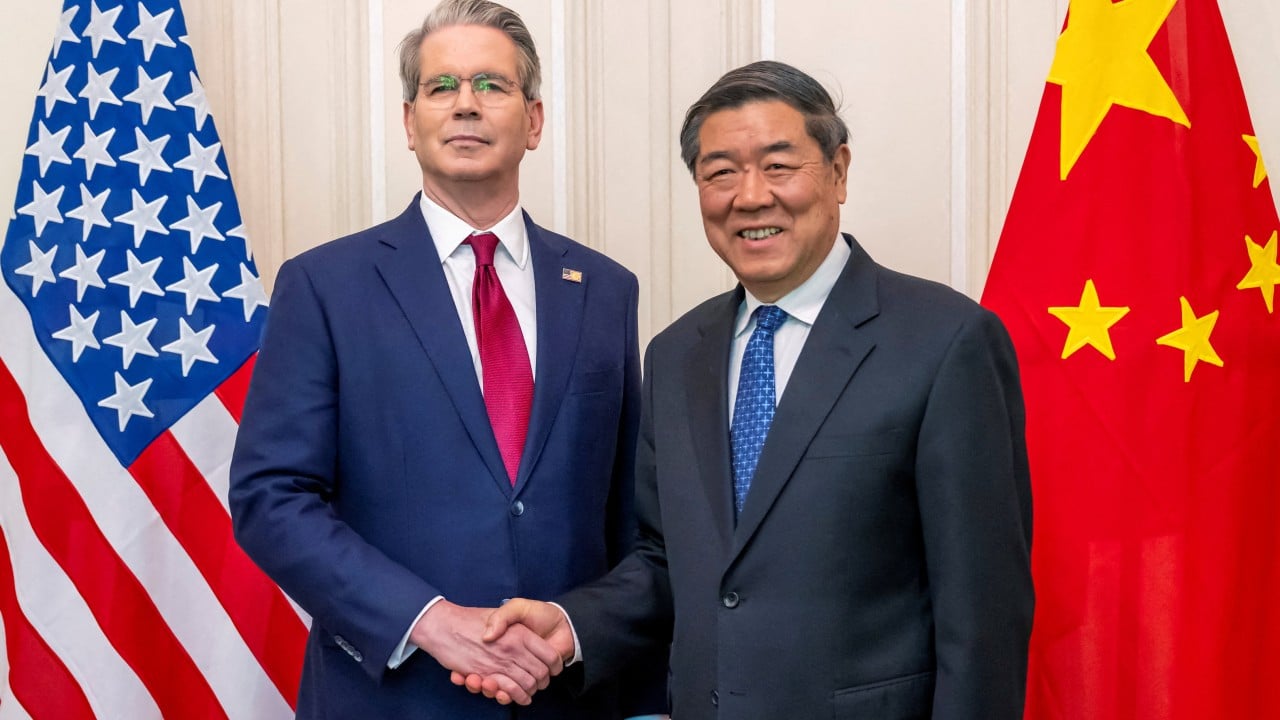
The financial press is currently salivating over the "breakthrough" news that trade chiefs are gathering in mid-March to pave the way for a Trump-Xi summit. The consensus is predictable: a meeting equals progress, progress equals a deal, and a deal equals a return to the globalist status quo.
They are dead wrong.
This isn’t a diplomatic bridge; it’s a controlled demolition. If you’re waiting for a "return to normalcy," you’ve fundamentally misunderstood the structural shifts in the global economy. We are witnessing the formalization of a permanent divorce, not a reconciliation. The mid-March meeting is a theatrical performance designed to manage market volatility while both sides continue to sharpen their knives behind the curtain.
The Mirage of the Master Deal
The "lazy consensus" argues that because both leaders face domestic economic pressure, they are desperate for a signature. Trump wants a surging stock market for his political narrative; Xi needs to arrest China's deflationary spiral. Therefore, they must settle.
This logic ignores the Security-First Paradigm. In 2026, trade is no longer about comparative advantage; it is a vector for national security. When the US Commerce Department identifies semiconductors or EV batteries as "foundational technologies," they aren't looking for a better price—they are looking for total denial of access.
A "deal" in this environment is merely a temporary ceasefire that defines the new borders of an economic Cold War. I have sat in boardrooms where executives liquidated entire supply chains because they realized a signed document in D.C. or Beijing doesn't change the fact that the two systems are now technologically incompatible.
Why the "People Also Ask" Queries Are Flawed
Most people are asking: "When will the trade war end?"
That is the wrong question. It’s like asking when the Atlantic Ocean will stop being salty. The trade war isn't an event; it's the new operating system.
Another common query: "Will a deal lower prices for consumers?"
Brutally honestly: No. Even if tariffs are lowered—which is a massive "if"—the cost of "de-risking" and "friend-shoring" is already baked into the global inflation floor. Companies are spending billions to move factories from Shenzhen to Vietnam or Mexico. Those capital expenditures (CAPEX) are not being absorbed by margins; they are being passed to you. A mid-March handshake doesn't dismantle a multi-billion dollar factory in Queretaro.
The IP Theft Red Herring
The competitor article focuses heavily on Intellectual Property (IP) protection as a hurdle. This is a 2018 talking point.
The real friction point now is Data Sovereignty. China’s "Data Security Law" and the US push against "Connected Vehicles" have created a digital Iron Curtain. You cannot "negotiate" your way out of a scenario where one country views the other’s software as a Trojan horse.
Imagine a scenario where China agrees to buy $50 billion more in American soybeans. The media will call it a win. In reality, it’s a distraction. While the world watches the soybean ticker, the real war over AI compute standards and subsea cable dominance continues unabated. The soybeans are the tribute paid to keep the public quiet while the industrial bases are ripped apart.
The Battle Scars of "Just-in-Time"
I’ve seen multinational firms lose 40% of their valuation in a single quarter because they believed the "thaw" was real and failed to diversify their sourcing. They treated trade headlines as investment signals.
Expertise in this field requires recognizing that geopolitics has permanently superseded economics.
- Weaponized Interdependence: Both nations are trying to reduce their own vulnerabilities while maximizing the other's dependence.
- The Subsidy Race: Even if tariffs vanish, the "Inflation Reduction Act" in the US and China’s "Made in China 2025" (and its successors) are essentially state-funded trade barriers.
A deal cannot fix a structural mismatch where both parties are subsidizing the exact same industries to achieve dominance. You cannot have two "Global Leaders" in the same sector.
The Mid-March Meeting is a Volatility Trap
Expect a "joint statement" that uses vague language about "mutual respect" and "constructive dialogue." This is code for "we didn't agree on anything that actually matters."
Traders will buy the rumor and sell the news. If you’re an investor, the smart move isn't betting on the outcome of the summit. It’s betting on the permanence of the friction. The winners won't be the ones who hope for a deal; they will be the companies that have already assumed the deal is a lie.
The downside to this contrarian view? It’s cynical. It acknowledges that the era of cheap, easy globalization is dead. It’s uncomfortable to admit that our "trade chiefs" are essentially just managing the terms of a long-term conflict.
The Actionable Pivot
Stop looking at the March summit as a "reopening" of China or a "softening" of US policy. Treat it as a deadline to audit your exposure to the following:
- Dual-Use Technology: If your product involves sensors, data, or advanced materials, a "deal" won't save you from future export controls.
- Logistics Bottlenecks: Diversify away from the Taiwan Strait and the South China Sea now.
- Currency Volatility: A failed summit or a "fake" deal will send the Yuan and the Dollar into a tailspin.
The mid-March talks are a sedative for a market that can't handle the truth. The truth is that the two largest economies in the world are currently engaged in a slow-motion car crash, and a summit is just a brief moment where the drivers check their mirrors before the next impact.
Stop waiting for the peace treaty. It’s not coming. The "summit" is just the intermission.
Get back to work.