Conventional foreign policy pundits are hyperventilating over the wrong question. They see a Democratic sweep in the US midterm elections and immediately assume Beijing is panicking that its direct line to Donald Trump just lost its value. That is lazy, Beltway-bubble thinking. It mistakes domestic American theater for geopolitical reality.
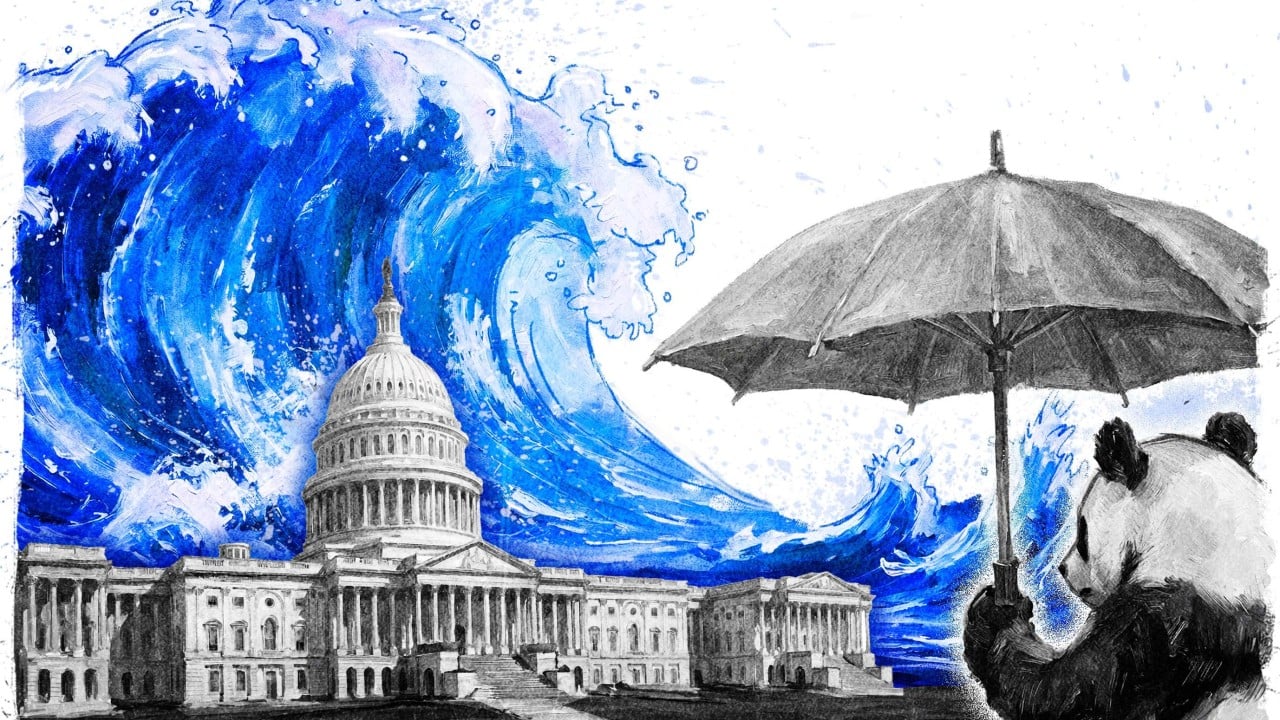
Beijing does not measure stability by whether a US president holds absolute sway over Capitol Hill. The Chinese Communist Party views American domestic gridlock as a structural gift, not a crisis. When a midterm "blue tsunami" strips the White House of unified legislative control, it does not erode China's faith in the Trump-Xi dynamic. It clarifies the exact price tag of every bilateral concession.
The Myth of the All-Powerful Executive
Western analysts love projecting their own anxieties onto Zhongnanhai. The prevailing narrative suggests Xi Jinping invested heavily in personal rapport with Trump, betting on a strongman who could bypass bureaucratic inertia and deliver sweeping bilateral deals. According to this logic, a Democratic House—or a flipped Senate—turns Trump into a lame duck, rendering Beijing's diplomatic investments worthless.
I have sat in boardrooms from Shanghai to Washington watching multinational executives burn millions of dollars restructuring supply chains based on this exact misreading of US-China mechanics. They assume legislative opposition paralyzes the White House on trade and foreign policy.
In reality, the exact opposite happens.
Under the US Constitution and decades of congressional delegation, the presidency retains overwhelming, unilateral authority over tariffs, sanctions, export controls, and diplomatic recognition. Section 301 of the Trade Act of 1974, the International Emergency Economic Powers Act (IEEPA), and Section 232 of the Trade Expansion Act do not require a single Democratic vote to deploy or suspend. When Congress turns hostile, a president's domestic legislative agenda dies—meaning foreign policy and executive trade deals become the only remaining arenas where the Oval Office can claim unilateral victories.
Beijing knows this. Chinese strategists read the Federal Register closer than most members of Congress. They understand that a domestically constrained president is hungrier for a headline-grabbing trade truce or agricultural purchase agreement than a president riding high with a compliant legislature.
Why Gridlock Is Beijing’s Preferred Operating Environment
To understand why Beijing welcomes a divided Washington, you have to look at how the two systems process time and leverage.
- Subpoenas Distract Hawks: A Democratic majority in the House immediately shifts committee bandwidth toward domestic oversight, administrative subpoenas, and budget showdowns. While Washington eats itself alive over domestic investigations, the legislative velocity of anti-China industrial policy slows down.
- Executive Isolation Creates Deal-Making Urgency: When domestic tax or infrastructure bills stall in a split Congress, the White House needs tangible economic wins ahead of the next presidential cycle. Avoiding a recession caused by escalating tariff wars becomes an existential priority for the administration.
- Bipartisan Consensus Has Limits: Yes, both parties in Washington agree on strategic competition with China. No, they do not agree on the mechanism. Democrats favor multilateral export controls, green-energy subsidies, and labor-aligned trade enforcement. Trump favors bilateral tariffs and transactional deal-making. When Democrats take Congress, they fight the White House over how to confront Beijing, fracturing the unified front that actually threatens Chinese economic interests.
"In strategic competition, an adversary divided over tactics is vastly preferable to an adversary united behind a single coherent doctrine."
Consider a simple thought experiment. Imagine a scenario where the White House holds a unified Congress for four straight years. In that environment, tariff hikes get codified into permanent law, outbound investment screening expands without friction, and defense appropriations for the Indo-Pacific pass on fast-track schedules. Now contrast that with a post-midterm divided government where every major funding bill is held hostage to domestic riders. Which environment gives Beijing more room to maneuver?
The Transactional Reality of the Trump-Xi Dynamic
The competitor narrative treats the Trump-Xi relationship like a fragile personal friendship that shatters when political weather changes. That insults the intelligence of both leaders. Neither man operates on sentiment.
Xi Jinping is a Leninist institutionalist who views individuals as vehicles for structural power. Donald Trump is a transactional negotiator who treats alliances, tariffs, and summits as leverage points in an ongoing deal. Beijing never had "faith" in Trump in the Western diplomatic sense of trusting a partner to uphold shared norms. Beijing had clarity on Trump's incentives.
A blue wave does not erase those incentives; it sharpens them.
- Market Sensitivity: Trump measures presidential success heavily through equity markets and inflation metrics. A Democratic Congress will hammer the administration on consumer prices at every opportunity. That puts immense pressure on the White House to avoid tariff escalations that spike retail costs, giving Beijing natural insulation against maximum-pressure economic warfare.
- Agricultural and Industrial Pressure: Swing-district politics force the White House to protect manufacturing and farm states ahead of the general election cycle. Beijing holds the purchasing power over soybeans, sorghum, and energy imports that directly impact those exact electoral maps.
- The Summit Premium: When domestic legislative wins dry up, high-stakes bilateral summits become prime-time television opportunities for the Oval Office. Beijing knows it can trade symbolic deliverables—fentanyl precursor crackdowns, modest market-access tweaks, or state-visit optics—in exchange for tariff pauses.
Dismantling the "People Also Ask" Fallacies
When global markets try to price in midterm election results, the same flawed questions dominate financial press coverage. They fail because they rest on false premises about how Washington and Beijing actually interact.
Does a Democratic Congress force the White House to take a tougher stance on China?
No. History shows the exact opposite dynamic. During the 2018 midterms, Democrats captured the House, yet the administration proceeded directly toward the Phase One trade deal negotiations throughout 2019. Domestic political pressure from a hostile Congress did not prevent bilateral deal-making; it pushed the White House to secure an economic truce before the 2020 campaign cycle ramped up.
Will Beijing wait out the remaining two years of the administration instead of negotiating?
Waiting out an American president is a fantasy invented by commentators who do not understand Chinese domestic pressures. Beijing faces real structural headwinds—local government debt, youth unemployment, and industrial overcapacity. China needs external demand and predictable tariff baselines now. Beijing will not sit on its hands for twenty-four months hoping for an uncertain outcome in the next presidential race when it can extract tactical relief today.
Does a blue tsunami weaken American deterrence in the Taiwan Strait?
Deterrence relies on military capability, regional alliances, and executive resolve—not which party chairs the House Ways and Means Committee. However, domestic political paralysis in Washington creates perception risks. If Beijing sees a White House bogged down in constitutional trench warfare with Congress, Chinese planners may calculate that Washington lacks the political bandwidth to manage a simultaneous crisis in the Indo-Pacific. That is a dangerous miscalculation, not a loss of faith in bilateral diplomacy.
The Blind Spots in This Contrarian View
Every sharp thesis carries operational risks, and ignoring them is how portfolio managers lose their shirts. Betting that a blue wave guarantees smoother US-China relations misses two major wildcards.
First, a cornered president sometimes uses external escalation to rally domestic support or distract from congressional investigations. If Democratic oversight becomes existential, the White House could weaponize Section 301 tariffs even more aggressively to project strength to its base, overriding Wall Street's inflation concerns.
Second, a Democratic House will aggressively push human rights sanctions, forced-labor import bans under the Uyghur Forced Labor Prevention Act, and technology blacklists that the White House cannot easily veto without looking weak on national security. Even if the Oval Office wants a grand bargain, Congress can lay legislative landmines that poison the diplomatic atmosphere.
How Operators Should Actually Position for Divided Washington
If you run a cross-border business, manage global capital, or advise on supply chain resilience, stop watching cable news panels debating who "won" the midterms. Watch the administrative mechanisms that actually move money and goods.
- Separate Legislative Noise from Executive Action: Ignore 90 percent of the anti-China bills introduced in a split Congress. Most are messaging bills designed for campaign fundraising and will never reach the president's desk. Focus exclusively on Commerce Department Bureau of Industry and Security (BIS) rulemakings and USTR tariff exclusion windows.
- Hedge Against Tactical Truces, Not Structural Decoupling: A divided government increases the odds of short-term tariff pauses or narrow bilateral agreements, but it will never reverse the bipartisan consensus on semiconductor, AI, and biotech decoupling. Do not mistake a temporary trade ceasefire for a return to 2015 globalization.
- Price in Volatility Around Budget Deadlines: Whenever a Democratic Congress and a Republican White House clash over debt ceilings or government shutdowns, expect sudden, hawkish foreign policy announcements from both sides to prove neither is soft on Beijing.
Beijing is not mourning a US midterm blue wave. Chinese diplomats are uncorking the baijiu, watching Washington turn inward on itself, and recalculating how much cheaper their next bilateral deal with the White House just became.