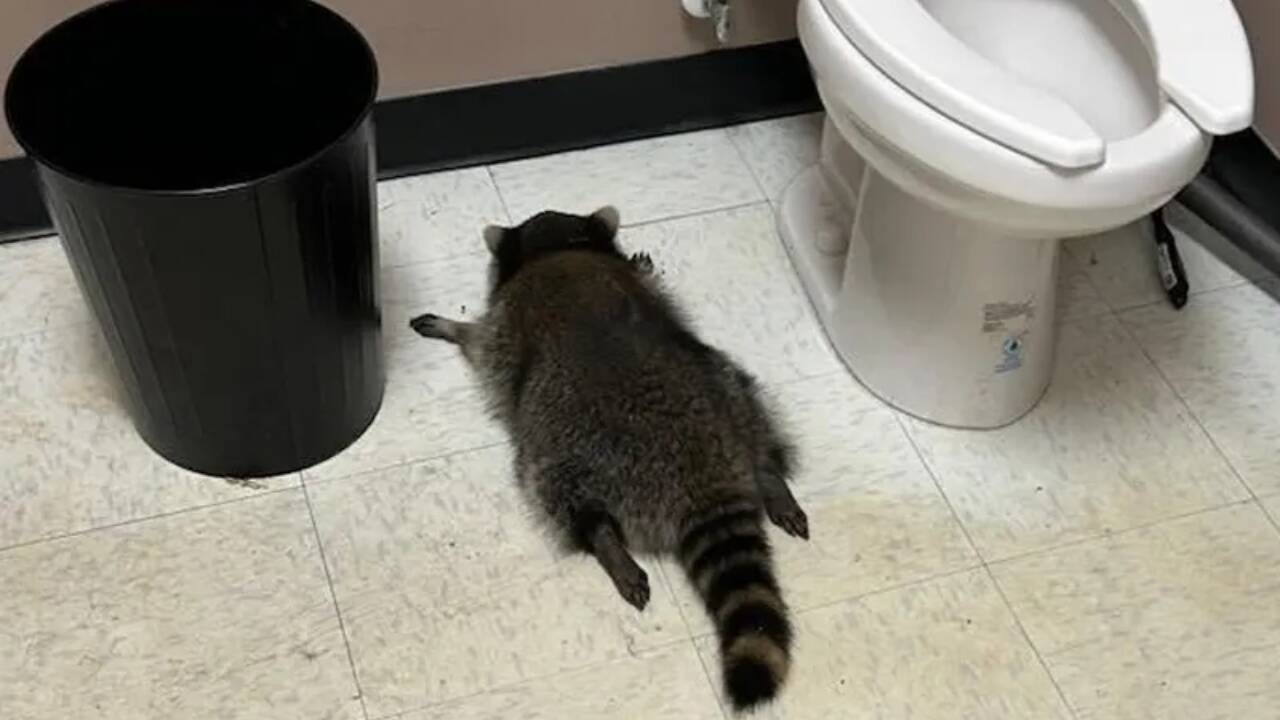
Everyone is celebrating a tipsy trash panda. The internet loves a feel-good animal story, especially one involving fermented fruit, a confused marsupial-adjacent mammal, and a sudden windfall of $290,000 for a Virginia animal shelter. Local news anchors are smiling. PR agencies are high-fiving. Nonprofit boards across the country are staring at their quarterly spreadsheets and wondering how they can manufacture their own viral lightning bolt.
They are asking the completely wrong question.
The mainstream coverage of the Virginia shelter windfall frames this moment as a triumph of modern digital fundraising. It treats a bizarre wildlife incident as a replicable marketing strategy. That narrative is not just lazy; it is financially dangerous for every executive director currently struggling to keep the lights on. When a charity relies on an accidental viral circus to fund basic operations, it does not have a business model. It has a lottery ticket.
The Illusion of Viral Philanthropy
Let us strip away the adorable photos and look at the cold economics of viral fundraising. I have spent fifteen years sitting in boardrooms watching organizations burn millions of dollars trying to reverse-engineer internet fame. Every single time an anomaly like this hits the news cycle, executive teams panic-pivot their budgets. They hire expensive social media consultants to chase trends instead of building infrastructure.
Here is the brutal truth about the $290,000 raccoon windfall: attention is not affinity.
When a funny animal story explodes across social media feeds, thousands of people click a link and drop ten or twenty dollars into a digital bucket. They are not buying into the mission of the Virginia shelter. They are not reading the annual impact report. They are paying a small entertainment tax for a dopamine hit during their morning scroll.
In nonprofit finance, we measure success by donor retention—the percentage of first-time contributors who give a second gift the following year. According to decades of data from the Fundraising Effectiveness Project, the average retention rate for first-time online donors hovers around a dismal 19 percent. For viral, impulse-driven campaigns—think the ALS Ice Bucket Challenge or sudden celebrity-backed GoFundMe explosions—that retention rate frequently plummets into the single digits.
Ninety-plus percent of the people who funded that $290,000 spike will never think about that Virginia shelter again. They will not volunteer. They will not adopt a senior dog with expensive medical needs. They will not sign up for a $25 monthly recurring gift. The shelter got a massive sugar rush of cash, and now they face an inevitable, crushing insulin crash.
Why Nobody Talks About the Overhead Hangover
News outlets love reporting the gross top-line number. "$290,000 raised!" makes a great headline. Nobody writes the follow-up story six months later when the shelter is drowning in logistical debt.
Imagine a scenario where a small, rural animal shelter operates on a tight annual budget of $400,000. Suddenly, $290,000 drops into their bank account over a single weekend because a raccoon got into some fermented crabapples. Sounds like paradise, right? Wrong. It is an operational nightmare waiting to happen.
First, look at the administrative bloat. Processing thousands of micro-donations creates an immediate data-entry and tax-receipting bottleneck. If the shelter uses standard payment processors, credit card fees alone will instantly shave off roughly 3 percent—nearly $9,000 gone before a single bag of kibble is purchased.
Second, and far more dangerous, is mission drift and premature expansion. When boards see a massive cash infusion, they inevitably start making permanent financial commitments based on temporary revenue. They hire two new kennel technicians. They break ground on a new wing. They commit to taking in high-medical-cost animals from neighboring counties.
Twelve months later, the raccoon is forgotten. The viral traffic is dead. Payroll, however, is due every two weeks. The shelter now has a $650,000 annual expense structure supported by a $400,000 baseline donor base. That $290,000 gift just became a structural deficit that could bankrupt the organization within three years.
The Ethical Blind Spot in Wildlife Spectacles
Beyond the balance sheet, there is an uncomfortable ethical friction that the feel-good coverage completely ignores. Animal welfare organizations exist to protect animals from human negligence, habitat encroachment, and exploitation. Turning a distressed, intoxicated wild animal into a viral mascot blurs the line between conservation and cheap spectacle.
Let us define what actually happens when wild animals become intoxicated in suburban areas. Raccoons do not go out looking for a good time. In late autumn and early winter, fallen fruit—like apples, persimmons, or berries—ferments naturally on the ground. Desperate for calories before winter, wildlife eats the rotting fruit. The resulting ethanol toxicity leaves the animal disoriented, vulnerable to predators, unable to regulate its body temperature, and prone to severe internal organ damage.
To a wildlife rehabilitator, a drunk raccoon is a medical emergency. To a viral marketing machine, it is content.
When shelters lean into the comedy of wildlife distress to drive clicks, they inadvertently train the public to view wild animals as cartoon characters rather than fragile biological organisms. People start leaving fermented fruit out on their decks hoping to film their own viral clip. They approach disoriented animals for selfies instead of calling licensed rehabilitators, increasing the risk of bites, rabies exposure, and mandatory euthanasia of the animal for testing.
Dismantling the Worst Advice in Nonprofit Marketing
If you search for advice on how to replicate the Virginia shelter's success, you will immediately run into terrible guidance from self-proclaimed digital gurus. Let us dismantle the most common myths right now.
Myth 1: "You just need to tell more entertaining stories."
Entertainment is the enemy of sustained philanthropy. If you train your audience to expect comedy, cute memes, and bizarre accidents, you forfeit the right to ask them for money when things get grim. Real animal rescue is unglamorous. It involves parvovirus outbreaks, leaky roofs, behavioral rehabilitation, and expensive orthopedic surgeries. If your brand is built on a drunk raccoon, your audience will tune out the moment you ask them to fund a routine spay-and-neuter clinic.
Myth 2: "Any publicity is good publicity for a local shelter."
False. Unqualified traffic ruins your marketing data. When fifty thousand people from across the globe hit a local Virginia shelter's website, they destroy the organization's ad-targeting pixels and email deliverability metrics. A donor living in Seattle or London is not going to drive to Virginia to adopt a pit bull mix, nor are they going to show up to a local pancake breakfast fundraiser. Massive, geographically irrelevant traffic makes it harder and more expensive for the shelter to reach the actual neighbors who live within a twenty-mile radius of their front doors.
Myth 3: "Viral moments attract major donors."
High-net-worth philanthropists do not write five- and six-figure checks because they laughed at a TikTok video. Serious donors—the ones who endow programs and buy buildings—look for institutional stability, transparent governance, and measurable outcomes. In fact, a sudden viral circus often scares away sophisticated philanthropists because it makes the organization look chaotic and reactive rather than strategic.
The Heavy Hitters Know Boring Wins
Look at the organizations that consistently dominate the charitable sector without ever relying on viral stunts. Take Charity: Water or St. Jude Children's Research Hospital, or look at powerhouse regional animal welfare groups like Best Friends Animal Society.
None of these organizations built their empires on accidental internet jokes. They built them on relentless, mathematical obsession with donor lifetime value (LTV) and recurring revenue engines.
Scott Harrison at Charity: Water famously recognized that one-off donations were a treadmill to nowhere. He pivoted the organization toward The Spring, a monthly giving community where donors commit to automated recurring contributions. Why? Because predictable cash flow allows an organization to plan five years ahead instead of begging every thirty days.
Similarly, look at the work of behavioral economist Dan Pallotta, who has spent decades challenging how nonprofits think about growth and capital. Pallotta argues that charities fail because they are terrified of investing in genuine customer acquisition and long-term infrastructure, preferring instead to hope for cheap, miraculous handouts. Relying on a viral raccoon is the ultimate manifestation of that scarcity mindset. It is praying for manna from heaven because you refuse to build an irrigation system.
What the Virginia Shelter Should Actually Do With the $290,000
If I were sitting across the table from the board of directors at that Virginia shelter tomorrow morning, I would tell them to lock that $290,000 in a high-yield escrow account and forbid anyone from touching a dime of it for daily operations.
Here is the exact, unconventional playbook they need to execute immediately to turn a fluke into a fortress:
- Treat the entire $290,000 as venture capital for donor acquisition. Do not buy dog food with it. Use $50,000 of that windfall to hire a ruthless, direct-response fundraising specialist. Their sole job for the next ninety days is to segment every single person who donated during the raccoon spike by zip code.
- Ruthlessly purge the tourists and cultivate the locals. Anyone who gave from outside the state gets one polite thank-you email and a gentle pitch to join a $10/month digital community. Anyone who gave from within a fifty-mile radius gets a phone call, a handwritten note, and an invitation to a private behind-the-scenes tour of the facility. Turn those local impulse-clickers into lifelong neighborhood stakeholders.
- Fund a permanent endowment or capital reserve. Take the remaining $200,000 and drop it into a board-designated reserve fund. When the HVAC system dies in the middle of a Virginia July, or when a hoarding case dumps forty sick cats on their doorstep overnight, they will not have to beg the internet for miracles. They will simply write a check.
- Over-invest in unsexy infrastructure. Spend the final $40,000 upgrading their donor management software (CRM) and veterinary intake equipment. Better software increases donor retention by automating follow-ups. Better intake equipment reduces animal length-of-stay, which lowers daily care costs per animal forever.
Admitting the Downside of the Contrarian Path
Is this approach boring? Completely.
If the Virginia shelter follows my advice, they will not get invited back onto morning television. They will not win any flashy PR awards for "best viral campaign of the year." Their social media engagement will drop by 95 percent next month, and half their board members will probably complain that the marketing feels too corporate and dry.
Building a resilient, predictable revenue engine requires saying no to cheap applause. It means accepting slower, quieter growth in exchange for survival. You have to trade the thrill of a $290,000 weekend slot-machine payout for the tedious discipline of convincing fifty neighbors to give you twenty-five dollars a month for the next ten years.
Stop Chasing Raccoons
The next time a bizarre animal story explodes across your feed and raises a quarter-million dollars overnight, do not applaud the marketing genius behind it. Recognize it for what it really is: a statistical anomaly masking a broken funding model.
If your organization's survival strategy depends on local wildlife getting drunk on fermented fruit, you are not running a nonprofit. You are running a casino. Put down the smartphone, close the trending tab, and go build a recurring donor base before the hangover sets in.