The political commentariat is having another collective panic attack.
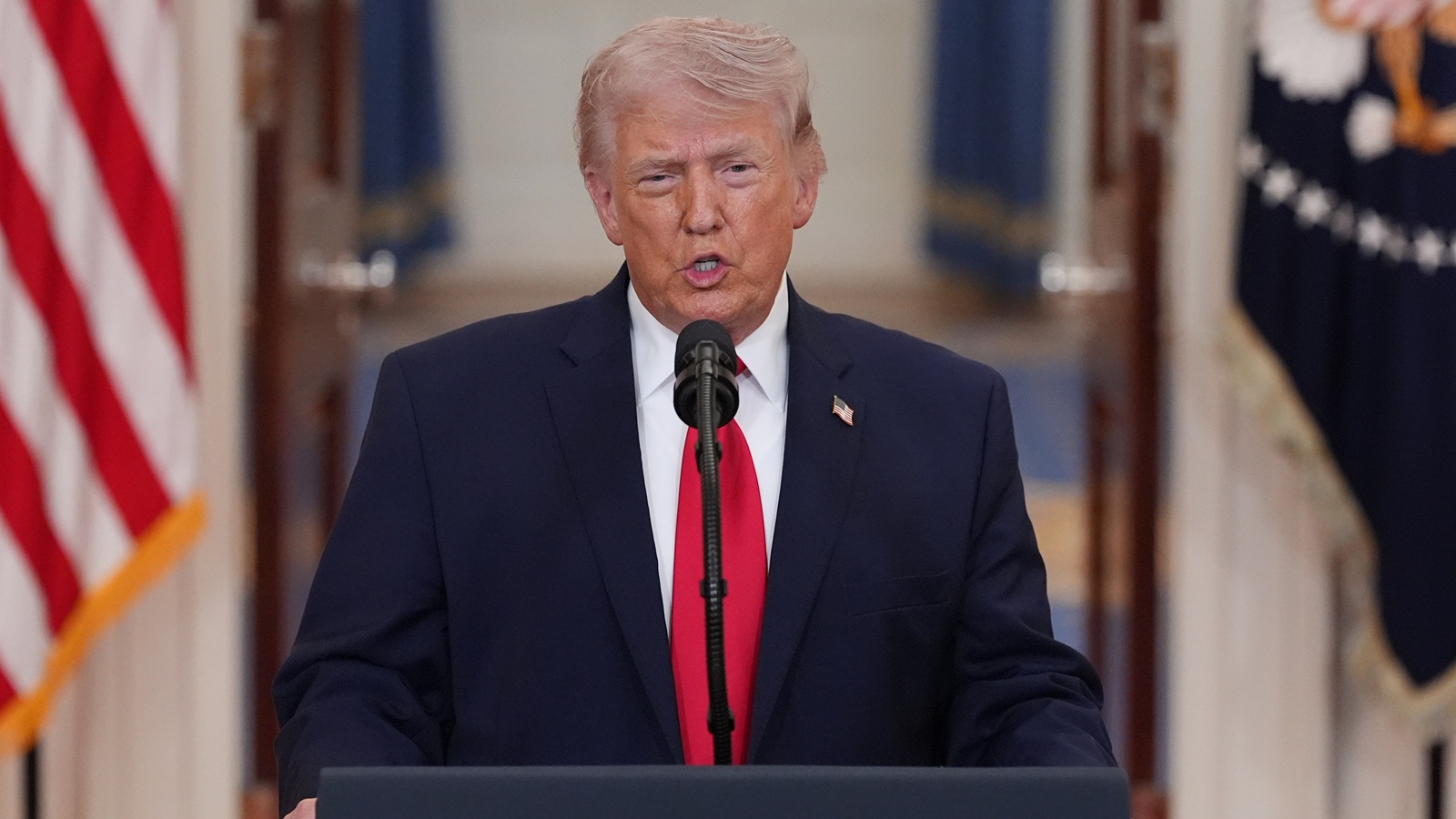
Following Donald Trump’s Thursday night address from the East Room, the mainstream consensus hardened instantly: Trump is laying the groundwork to contest the 2026 midterm elections. Pundits claim his aggressive focus on declassified intelligence, Chinese interference, and "compromised" voting systems is a strategic masterpiece designed to pre-emptively delegitimize a Democratic wave.
They are completely misreading the room.
This speech was not a calculated play for the midterms. It was a desperate, backward-looking defensive maneuver disguised as an offensive strike. The media treats Trump like a grandmaster playing three-dimensional chess, but the reality is far cruder.
I have watched political operations burn hundreds of millions of dollars trying to manufacture narratives. The most expensive mistake an insider can make is confusing a politician's personal obsession with a coherent legislative or electoral strategy. Trump isn’t trying to rig the upcoming midterms; he is trying to rewrite his own historical legacy while distracting from a domestic and foreign policy landscape that is actively cratering under his feet.
The Core Illusion: The Midterm Smokescreen
The conventional wisdom says Trump’s speech was a forward-looking warning shot to voters. Critics like Senator Mark Warner claim the narrative is a ploy to disrupt the November vote.
This view ignores the basic mechanics of how elections are won or lost.
Midterm elections are structurally a referendum on the incumbent president’s performance. Right now, voters are staring down brutal economic realities. Gas prices are soaring, the cost of living remains stubbornly high, and American forces are locked in an escalating, open-ended conflict with Iran that has choked off commercial shipping in the Strait of Hormuz.
If you are a Republican candidate fighting to hold a swing district, you do not want to talk about declassified CIA memos regarding Venezuelan voting software from June. You want to talk about inflation. You want to talk about the border.
Trump’s performance didn't hand his party a weapon; it handed them a distraction. By forcing his party to defend six-year-old grievances regarding the 2020 election and public-domain commercial voter data, he actively undercuts the exact economic messaging that could actually save the Republican majorities.
Deconstruction of the Intelligence "Bombshell"
Let’s look at the actual data dumped by the White House on Thursday night. The administration unveiled a dedicated website filled with redacted files, claiming they proved "shocking vulnerabilities" in the American voting infrastructure.
To the untrained eye, a declassified document looks like a smoking gun. To anyone who has actually worked with intelligence assets, it looked like a desperate scrap-booking exercise.
- The China Data Illusion: Trump claimed China accessed the data of 220 million U.S. voters. What he omitted is that this data was already entirely within the public domain. It was commercially compiled marketing data, not a breach of secure state election infrastructure.
- The Voting Machine Fallacy: The speech leaned heavily on the idea that electronic voting machines are inherently compromised. Yet, the primary document released to support this was a CIA memo assessing Venezuela's domestic voting systems—which explicitly stated the agency could not confirm any actual electronic vote rigging had taken place.
- The Noncitizen Data Irrelevance: Trump cited a Department of Homeland Security finding that allegedly identified 270,000 noncitizens on the voter rolls across four states. Out of more than 211 million registered voters nationwide, that accounts for roughly 0.12% of the electorate. Even if those numbers were accurate and un-duplicated—which election experts heavily dispute—they are statistically irrelevant to changing national outcomes.
The systemic defense of American elections has always been its fragmentation. We don't have a national election system; we have over 10,000 independent, decentralized voting jurisdictions operating under local rules. You cannot "hack" American elections at scale because there is no single central server to plug into. Trump knows this, but the narrative of a centralized "deep state" cover-up plays far better to an audience of 55 loyalists in the East Room.
The Real Target: The SAVE America Act Trap
The true legislative focus of the speech was a demanding push for Congress to pass the SAVE America Act, which mandates strict federal voter ID and proof-of-citizenship requirements.
| Feature | The SAVE America Act Provision | Practical Political Reality |
|---|---|---|
| Voter ID | Mandates national photo identification for all voters. | Alienates moderate Republicans concerned with federal overreach into state-run systems. |
| Mail-In Ban | Restricts mail-in ballots to severe illness or deployment. | Restricts access for older, rural voters who form the literal backbone of the GOP base. |
| Enforcement | Threatens state funding if local guidelines aren't overhauled. | Creates immediate friction with Republican governors who managed successful state rollouts. |
The lazy consensus says this bill is designed to suppress votes ahead of November. The contrarian truth is much simpler: the bill is designed to fail. Trump doesn't want the legislation to pass; he wants a visible list of "traitors" within his own party who refuse to vote for it.
By pushing a bill that lacks the numbers to clear Congress—even among Republicans—Trump creates a built-in scapegoat. If the midterms turn into a bloodbath for the GOP, he won’t blame his foreign policy failures or inflation. He will blame the lawmakers who refused to pass his act. It is institutional self-preservation, not electoral strategy.
The Flaw in the Media’s Playbook
Major networks like NBC, ABC, and CNN thought they were de-platforming Trump by refusing to broadcast his address live on their main networks. They claimed it was to prevent the spread of partisan misinformation.
This was a colossal tactical error.
By pulling the speech from legacy broadcasts, the networks handed Trump the ultimate verification of his thesis. He immediately used the snub to demand that these networks lose their broadcasting licenses. For his base, the media blackouts didn't prove Trump was wrong—it proved the media was terrified of what he was saying. It drove traffic directly to the White House's document dump, turning a dry, redacted stack of PDFs into forbidden fruit.
Stop looking at the midterm horizon to find Trump's true motivations. Look at the immediate domestic crises he is avoiding. The war in the Middle East is worsening, the domestic economy is creaking, and his party is terrified of a November wipeout.
The primetime address wasn't a warning shot for an upcoming war over the midterms. It was a smoke grenade deployed to cover an executive retreat from the present day.