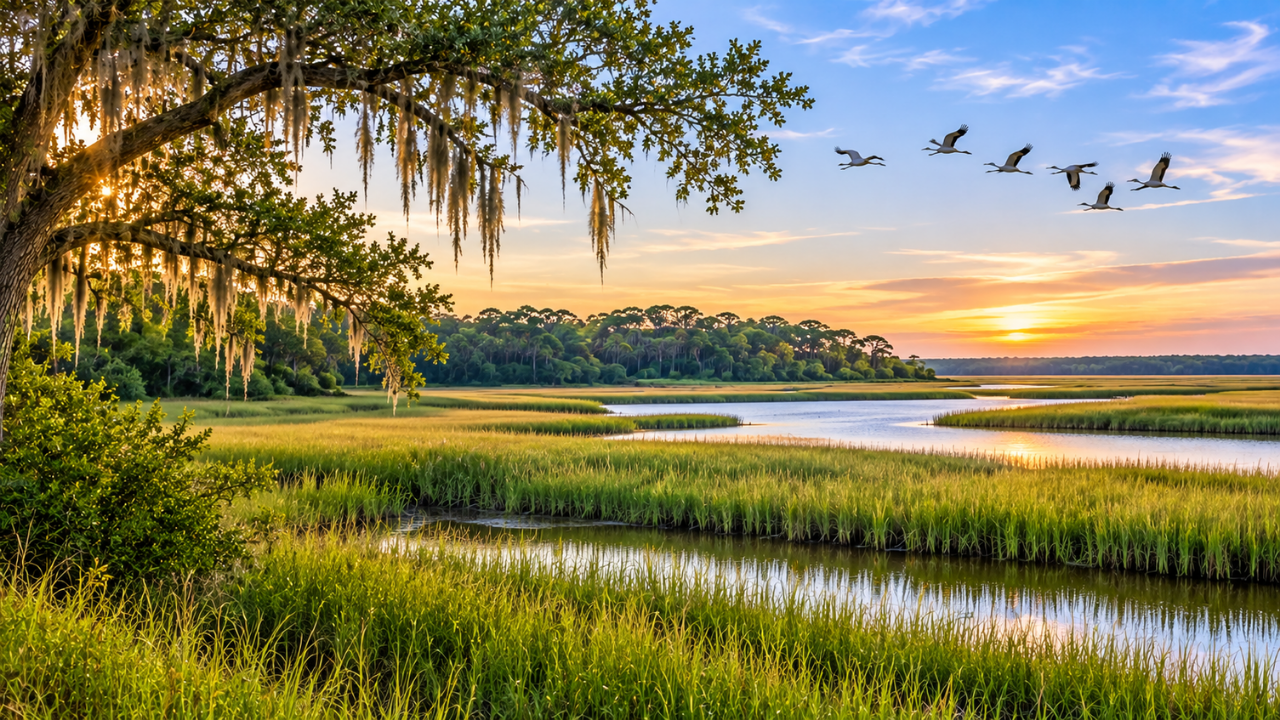
Twenty years is a long time to hold the line against suburban sprawl. Most local conservation battles fizzle out within eighteen months when legal fees climb, zoning boards rubber-stamp rezoning requests, and neighbors get exhausted. Yet South Carolina's 229-acre White Tract is finally heading toward permanent conservation after two decades of relentless pushback against high-density housing development.
If you've ever watched a quiet stretch of coastal or piedmont woods get flattened for cul-de-sacs and vinyl-sided townhomes, you know how rare this win actually is. Developers usually have deeper pockets, paid lobbyists, and patience. Residents have day jobs and bake sales. When a 229-acre parcel survives twenty years of development pressure in one of the fastest-growing states in the country, it's worth examining how that happened—and why the land itself mattered enough to spark a generational fight.
What Makes the 229-Acre White Tract Worth Fighting Over
Land conservation isn't just about keeping trees standing so people have something pretty to look at from their windshields. On the South Carolina coast and coastal plain, undeveloped tracts of this size act as massive natural sponges.
Think about what 229 acres of intact forest, wetlands, and soil actually does during a tropical storm or a stalled summer thunderstorm. Every acre of undisturbed wetland can store roughly 1 to 1.5 million gallons of floodwater, according to the U.S. Environmental Protection Agency. Multiply that across a large contiguous tract, and you're looking at serious flood mitigation for surrounding neighborhoods that already sit on low-lying ground.
Once you pave over 229 acres for rooftops, driveways, and retention ponds that overflow during king tides, that water doesn't vanish. It goes straight into adjacent creeks, tidal marshes, and neighboring yards.
Beyond drainage, large unbroken parcels do heavy lifting for wildlife corridors. Fragmented pockets of trees trapped between subdivisions don't support healthy ecosystems. Animals need room to move, forage, and breed without crossing four-lane roads every ten minutes. Keeping 229 acres intact preserves habitat continuity that smaller "pocket parks" promised by developers simply cannot replicate.
Why Development Battles in South Carolina Drag on for Decades
South Carolina has been near the top of U.S. Census Bureau population growth charts for years. People are moving south in droves, and builders are scrambling to put up rooftops as fast as counties will approve plats.
That growth creates a predictable collision.
On one side, property owners and developers see raw acreage as an underutilized asset. Under standard county zoning, a tract might allow low-density rural homes, which doesn't generate the massive profit margins builders want. So they apply for Planned Development districts or higher-density residential zoning. Suddenly, a quiet two-lane road is staring down hundreds of new homes, thousands of daily car trips, and strained sewer infrastructure.
On the other side, local residents and environmental groups step in to challenge those rezoning applications. Here's why those fights stretch across twenty years instead of wrapping up in a single election cycle:
- Zoning denials aren't permanent. If a county council votes down a developer's plan in 2008, nothing stops that developer—or a new buyer—from coming back in 2014, 2019, and 2024 with a slightly tweaked site plan. Conservationists have to win every single time; developers only need to win once.
- Infrastructure battles buy time. Opponents frequently challenge traffic impact studies, stormwater runoff calculations, and wetland delineation permits through the South Carolina Department of Health and Environmental Control (now the Department of Environmental Services) or the U.S. Army Corps of Engineers. Regulatory reviews take years.
- Real estate cycles stall projects. The 2008 housing crash froze dozens of approved and pending developments across the Carolinas. Rising interest rates in recent years slowed down another wave. Those market pauses give land trusts breathing room to assemble funding.
- Land prices keep climbing. Even when a landowner wants to sell to a conservation buyer, matching fair market value on 229 acres in a hot South Carolina real estate market takes millions of dollars. Raising that capital through state conservation banks, county greenbelt funds, and private donations doesn't happen overnight.
Honestly, surviving twenty years of that cycle requires a level of community coordination most neighborhoods never achieve. People move away, city council seats flip, and momentum dies. Keeping pressure alive across two decades means passing the torch from one group of organizers to the next without losing institutional memory.
How Land Trusts Turn a Stalemate Into Permanent Protection
You can't save land forever just by showing up at zoning hearings with protest signs. Public opposition only delays bulldozers; cold cash buys deeds.
In South Carolina, permanent protection for a property like the White Tract typically relies on a layered funding stack. No single pot of money covers the entire price tag anymore because land values have outpaced standard grant budgets.
First, conservation groups look to the South Carolina Conservation Bank (SCCB). Established by the state legislature in 2002, the SCCB awards grants to help acquire significant natural lands, working farms, and historical sites. Because state funds require high ecological or public-access value, a 229-acre parcel with strong watershed or habitat benefits fits their scoring criteria well.
Second, county-level greenbelt programs—like those funded by local half-cent sales taxes in counties such as Charleston, Beaufort, or Greenville—often step in as matching partners. Voters in several South Carolina counties have repeatedly approved bonding measures specifically to buy open space before it turns into strip malls.
Third, private land trusts bridge the gap. Organizations like the Open Space Institute, The Nature Conservancy, Lowcountry Land Trust, or Congaree Land Trust negotiate directly with landowners, handle due diligence, and sometimes buy the land outright using bridge loans while public grant applications wind through committee approvals.
Once the deal closes, protection gets locked in through one of two mechanisms:
- Fee-simple acquisition: A public agency or land trust buys the property outright, often turning it into a public nature preserve, passive park, or wildlife management area.
- Conservation easement: The landowner retains ownership (or sells to a private buyer) but permanently extinguishes the right to subdivide or commercially develop the acreage. That restriction attaches to the deed forever, binding every future owner.
The Hidden Misconception About Conserved Land and Local Taxes
Whenever a major tract like the 229-acre White Tract gets pulled off the development table, someone at a county council meeting inevitably complains about lost tax revenue. It's the oldest argument in the pro-growth playbook: houses pay property taxes, trees don't.
That argument falls apart the second you look at municipal balance sheets.
Suburban residential development rarely pays for itself. Studies by the American Farmland Trust across dozens of U.S. counties consistently show that for every $1.00 generated in residential property tax revenue, local governments spend roughly $1.15 to $1.50 providing public services to those homes. Think about what new subdivisions demand: new school classrooms, bus routes, sheriff patrols, fire stations, road widening, and water line extensions.
Undeveloped forest and open space, by contrast, requires almost zero municipal services. It doesn't send kids to public schools. It doesn't call 911 at two in the morning. It doesn't wear down asphalt. When you factor in avoided flood damage and lower infrastructure maintenance costs, conserving 229 acres often saves local taxpayers money over a thirty-year horizon.
What Developers Usually Promise vs What Actually Happens
During a twenty-year zoning fight, builders almost always pitch a compromise called "conservation design" or "clustered housing." The pitch sounds great on a glossy poster board at a town hall meeting. They promise to pack the houses onto half the property and leave the rest as "green space."
Don't fall for that without reading the fine print.
In practice, developer-designated green space frequently consists of unbuildable jurisdictional wetlands they couldn't legally touch anyway, narrow buffer strips behind backyards, and stormwater detention ponds surrounded by chain-link fences. Homeowners associations end up managing those scraps, spraying fertilizer and pesticides right next to creeks, and clearing underbrush that wildlife actually needs.
True conservation of an entire 229-acre tract keeps the upland forest connected to the wetlands. Upland buffers are where animals actually live when water levels rise, and they filter runoff before it ever hits a stream. Preserving the whole footprint—not just the soggy leftovers—is what makes the White Tract outcome a genuine ecological win rather than a marketing compromise.
Practical Ways You Can Protect Threatened Land in Your Own County
Watching a twenty-year fight succeed proves that local pushback works, provided you play the long game instead of treating every zoning hearing like a one-off event. If there's an unprotected tract near you facing speculative rezoning, don't wait until surveyors are hammering stakes into the ground.
Start by tracking your county's planning commission agendas every single month. Rezoning requests are public record, and early intervention during the staff review phase carries far more weight than showing up angry on the night of a final council vote. Focus your public comments on measurable infrastructure limits—stormwater capacity, school overcrowding, and traffic counts—rather than purely emotional appeals about losing a nice view.
Connect early with your regional land trust. Tell them which parcels matter in your watershed before those properties hit the open market. Land trusts can't make an offer on land they don't know is vulnerable, and landowners often don't realize conservation easements or state tax credits can rival a developer's net payout once capital gains taxes and holding costs are factored in.
Finally, vote for local greenbelt bond referendums when they hit your ballot. Advocacy stops bulldozers temporarily, but dedicated public acquisition funds are what permanently close the deal.