A single gunshot shattered the quiet architecture of Aarau just as the bass faded from a crowded local techno event. A 22-year-old woman is dead, five others are wounded, and a massive manhunt spans across international borders.
When violence strikes a high-density gathering in a country famed for its orderly streets and predictable social fabric, the shockwaves register far beyond local police blotters. Early Sunday morning at the Schachen district horse racing track, roughly thirty-five hundred attendees were wrapping up an edition of the Aarau Rave. Witnesses initially dismissed the sharp cracks as celebratory firecrackers or rogue pyrotechnics. That fleeting miscalculation cost precious seconds before the reality of live ammunition tore through the crowd.
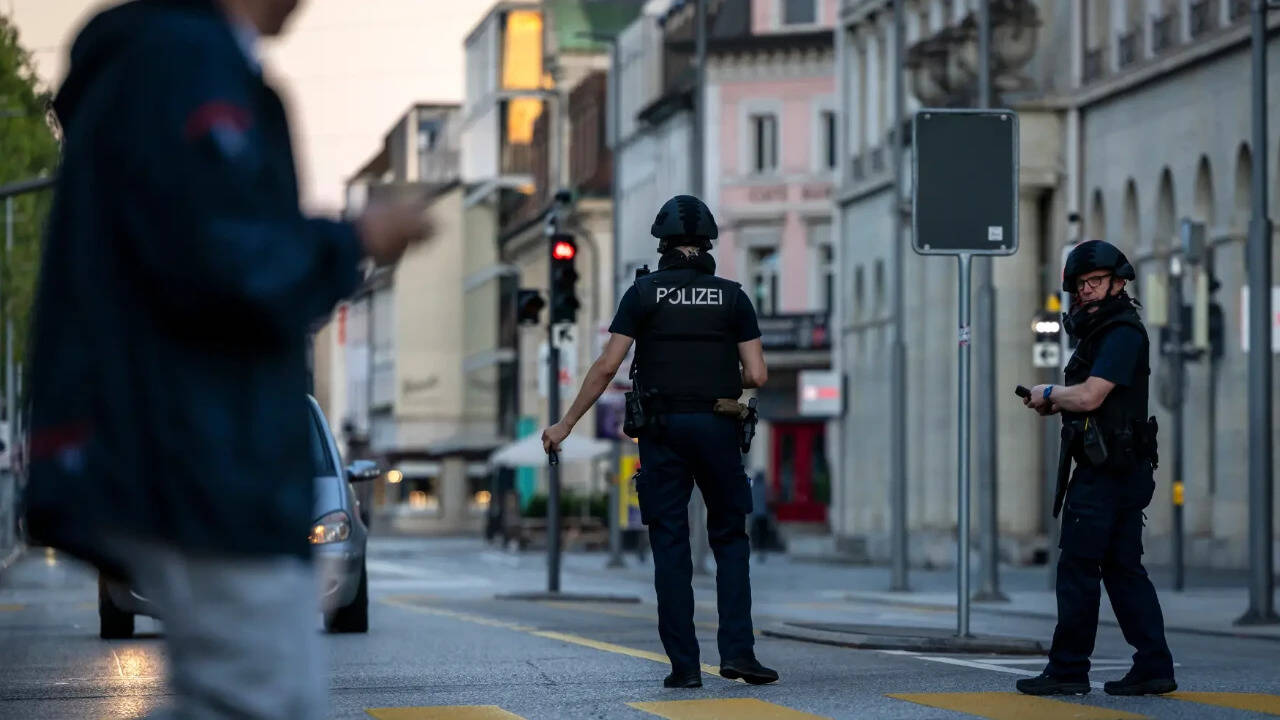
Aargau cantonal police deployed virtually every available officer into the streets, sealing off perimeters and coordinating with regional forces in neighboring Germany. Forensic recovery teams quickly identified cartridge casings matching two distinct firearm calibers, pointing immediately toward the grim possibility of multiple shooters or a heavily armed assailant.
The Anatomy of an Alpine Manhunt
The logistical nightmare facing Swiss law enforcement right now involves tracing invisible paths through open borders and dense transit networks. Unlike major metropolitan hubs designed with dense surveillance grids, mid-sized Swiss towns like Aarau rely heavily on a baseline of civic trust. When that trust breaks, the operational shift from local policing to a nation-wide dragnet requires heavy resources. Armored vehicles, specialized tactical units, and border checkpoints have transformed parts of northern Switzerland.
Authorities are walking a tightrope regarding motive. Police commanders have refused to discard any working theory, keeping terrorism, a targeted mass shooting, and personal escalations on equal footing.
"Where an active shooter is firing into a crowd of thousands of people at an event, it is perfectly clear that we consider terrorism as a motive," Aargau police commander Michael Leupold noted during an early briefing.
Yet other investigators point out that the timing—occurring just as the music stopped and the venue emptied—could equally suggest a violent personal dispute that boiled over into the open. Dual-caliber cartridge evidence complicates both hypotheses, suggesting either a chaotic weapon swap, a secondary shooter, or a firearm configuration that defies simple categorization.
The Paradox of Swiss Gun Culture
Public discourse across Europe often stumbles when trying to categorize Switzerland's relationship with firearms. The country maintains one of the highest per-capita gun ownership rates on the continent, rooted deeply in militia defense traditions and compulsory military service structures. Citizens grow up with firearms integrated into civic life.
Despite this heavy saturation of private weaponry, mass public shootings remain exceedingly rare. Cultural norms, strict local registration, and a societal aversion to public disorder have historically kept gun violence tightly contained. That statistical anomaly is precisely why the bloodshed in Aarau feels so disruptive to the national psyche. When an exceptional event pierces through a routine sense of safety, the public demand for answers grows sharp and immediate.
Citizens look to institutions to provide absolute security, forgetting that open societies are inherently vulnerable to calculated disruption. Investigators are currently combing through digital debris, sifting through phone videos, and pleading with attendees to upload unedited footage to closed police portals. Every digital fragment matters when the suspect pool remains fluid and the underlying intent is still obscured by conflicting evidence.
The immediate perimeter around the Schachen track remains locked down, and counseling centers in nearby gymnasiums continue to process the psychological fallout for survivors who went looking for community and found chaos instead. As the manhunt stretches into its second day, the true test for Swiss security forces will not just be capturing those responsible, but reckoning with how easily an ordinary night can be upended.