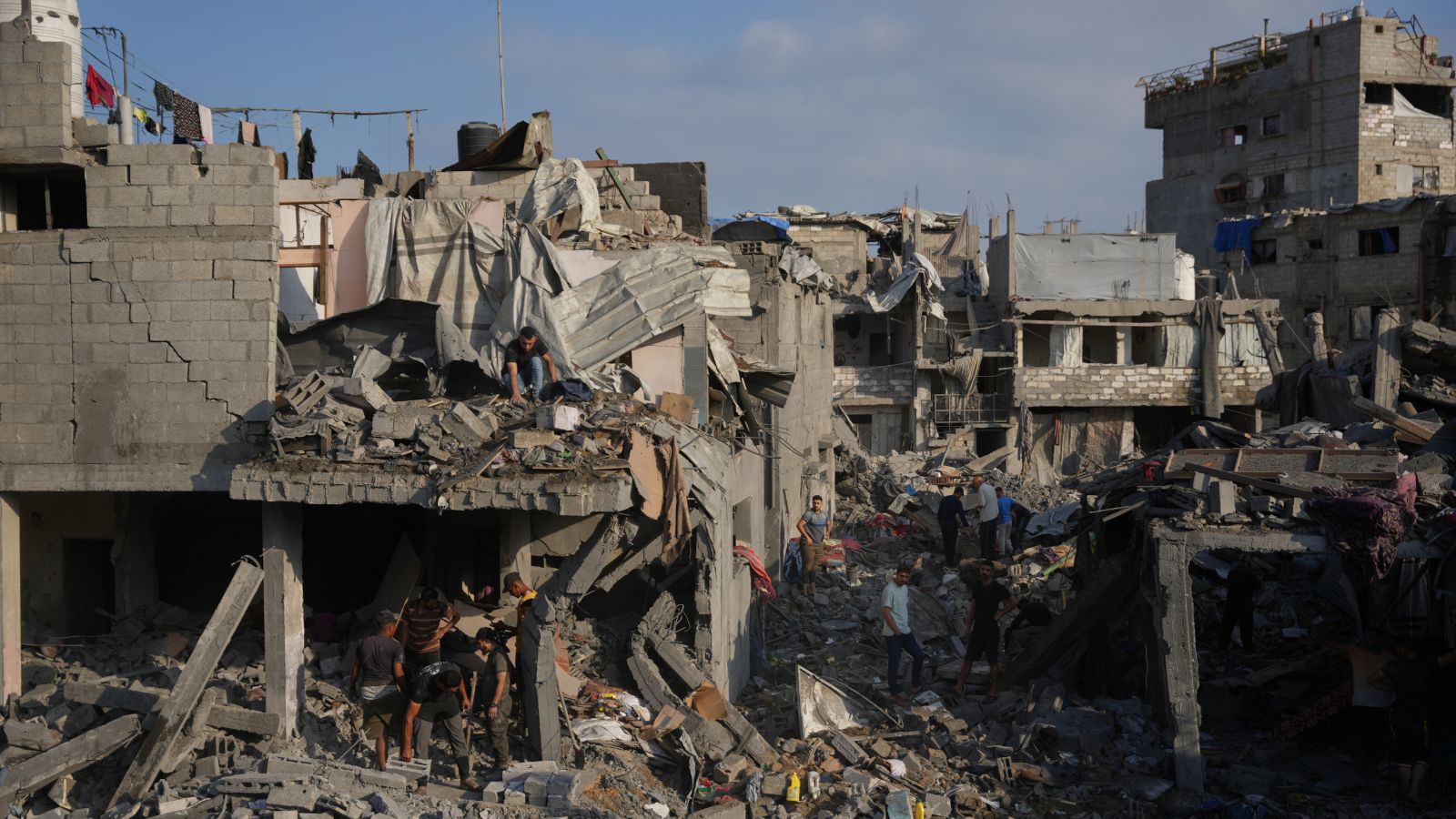
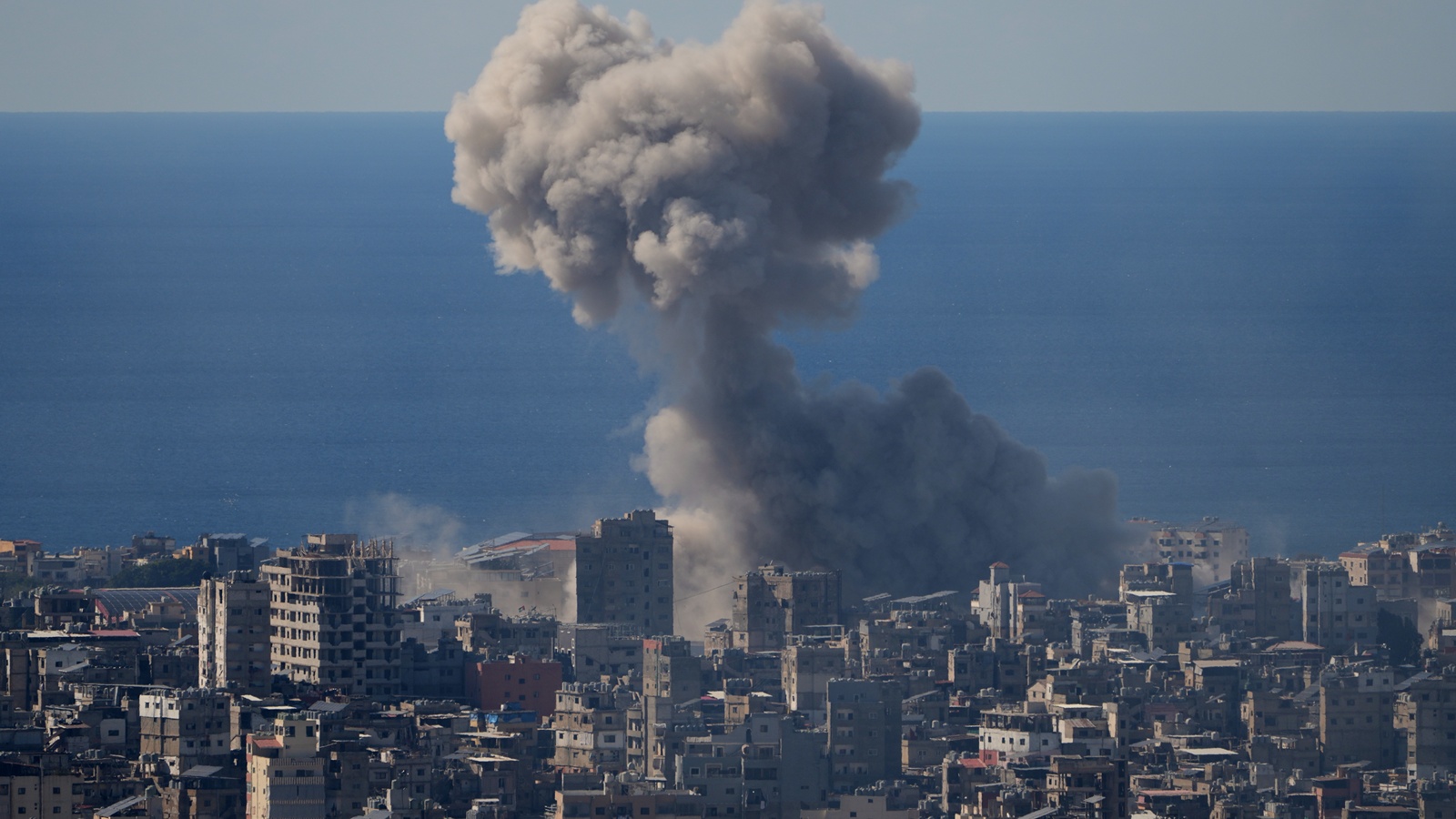
The asphalt on the bridge outside Bandar Khamir does not care about geopolitics. It cares about the weight of concrete trucks, the salt-heavy humidity rolling off the Persian Gulf, and the tires of the local passenger buses that rumble toward Bandar Abbas every morning. Until last night, that bridge was simply a physical fact—a slab of human effort spanning an expanse of southern Iran, anchoring life to a coastline that has seen empires rise and fall like the tide.
Then the sky tore open.
When a precision-guided munition strikes a bridge, it does not just shatter steel and stone. It severs a nerve. Suddenly, the simple act of traveling ten kilometers west to work becomes an impossibility. The state railway operator frantically reroutes passenger trains, telling exhausted commuters they must disembark, pack their belongings onto a fleet of hastily assembled buses, ride to an undisturbed junction in Fin, and board another train just to complete a journey that used to take minutes.
This is what a war of attrition looks like when it leaves the maps of military strategists and lands on the doorsteps of ordinary people. For six consecutive nights, the sky over southern Iran has belonged to American fighter jets, drones, and warships. The stated goal from U.S. Central Command is precise, clinical, and sterile: "degrading military capabilities," hitting air defense sites, and choking off the logistics network near the crucial Strait of Hormuz.
But a military target and a civilian artery are often the exact same piece of concrete.
Consider Reza, a hypothetical but entirely accurate composite of the truck drivers currently stranded along the Hormozgan province. He does not control the maritime flow of liquefied natural gas or the "steel wall" naval blockade enforced by American warships. He knows only that six bridges in his county are gone, seven of his countrymen are dead from the overnight strikes, and the fuel storage tank at the nearby Iranshahr airport is a blackened husk. When he flips the switch in his home, the lights do not come on. The Energy Ministry is pleading with citizens across the south to conserve what little electricity remains after the transmission lines feeding Bandar Abbas were shredded.
The rhetoric from Washington is unyielding. The administration declares it is "winning big," warning that the coming weeks will get worse unless Tehran returns to the negotiating table. To prove the point, images circulate on social media showing the bombed-out maritime control tower in the port of Chabahar collapsing into rubble.
But pressure applied in one corner of the Middle East rarely stays contained. It bleeds outward, defying borders and expanding into a volatile, multi-front reality.
Hours after the bridges fell, the shockwaves registered hundreds of miles away. In the quiet, pre-dawn darkness of Bahrain, the sirens began to wail. It was the second time in a single day that the country’s interior ministry had to warn its citizens to seek cover. The Iranian Revolutionary Guard, furious over the destruction of its domestic infrastructure, declared that if its own homeland was to be systematically dismantled, no infrastructure in the region would be safe.
Drones and missiles leaked across the Gulf, aimed at the sprawling network of American military installations scattered throughout neighboring Arab nations. Iran’s army claimed it had successfully struck U.S. helicopters and reconnaissance aircraft at Bahrain's Sakhir Air Base. In Kuwait, air defense systems hummed to life, desperately tracking incoming signatures targeted at American logistics centers.
Even in Qatar, a nation that has spent months acting as a diplomatic bridge trying to mediate peace talks between the two bitter adversaries, the war arrived via text message. Mobile phones buzzed in the dead of night with urgent security alerts from the government. Soon after, the dull, concussive booms of missile interceptions echoed over Doha. Shrapnel—the jagged, unpredictable debris of a war fought in the stratosphere—rained down on a residential neighborhood, injuring a child.
The conflict has stretched its fingers as far as the arid borderlands of Syria, where Iran claimed a strike on a U.S. special operations command center in the Al-Tanf region. Though local military sources quickly denied the bombardment, the mere assertion underscores a terrifying truth: the theater of war is expanding faster than diplomacy can keep pace.
It is easy to get lost in the dizzying array of claims and counter-claims, the acronyms of commands, and the staggering statistics of thirty-eight dead and over four hundred wounded in a single week. The conflict can seem abstract when viewed through the clean lens of a satellite map or the triumphant social media posts of defense secretaries.
But the reality is found in the dark, quiet homes of southern Iran, where families sit without power, listening for the drone of aircraft overhead. It is found in the frantic scramble of a parent in Qatar holding a child injured by falling metal. It is found in the sudden, jarring realization that the infrastructure we take for granted—the bridges that connect us, the power grids that illuminate our lives, the ports that feed us—can vanish in a flash of light.
The regional deterrence that once held a fragile April ceasefire together is eroding, replaced by an escalating tit-for-tat cycle where every action demands a heavier, bloodier reaction. As the two nations vie for control of a narrow strip of water through which the world’s economy flows, the stakes are no longer confined to naval supremacy or political pride.
The real cost is being written in the dust of broken junctions and the smoke of burning ports, where the everyday lives of millions are being dismantled, piece by piece, bridge by bridge.